Description: A simple, small Japanese-style salad. It is a welcome addition to your main meal. You can chill it before serving, which is refreshing in summer. In winter, you can serve it hot, as it would be comforting.
Serves: 2
Cooking time: 15 minutes
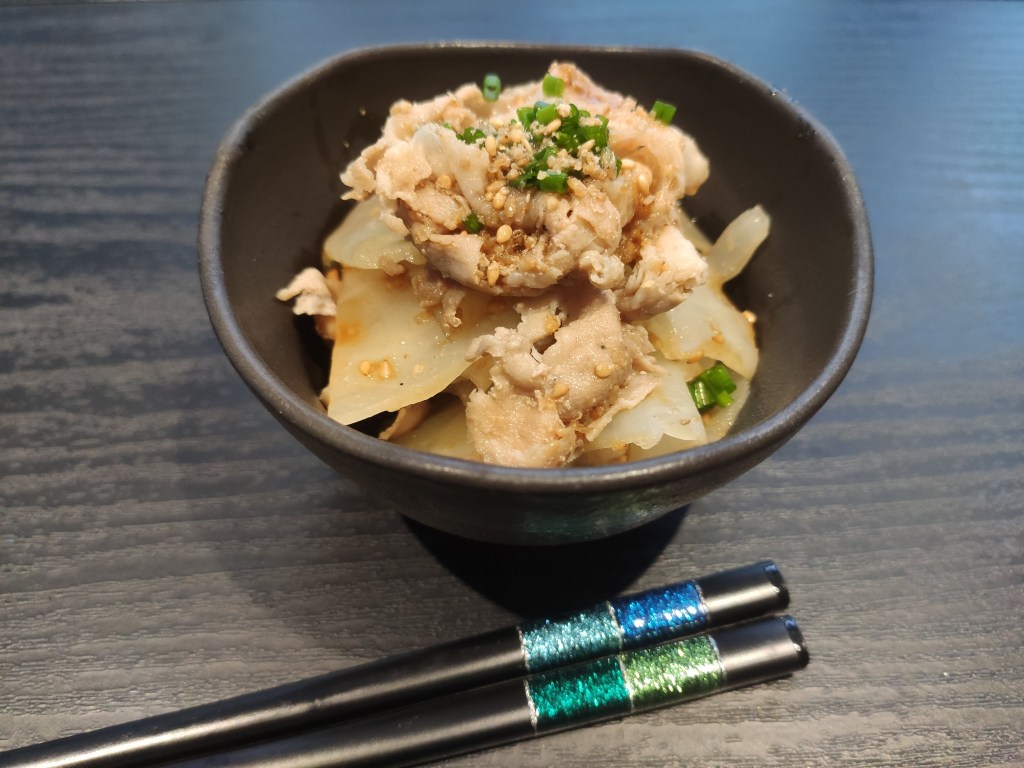
Ingredients
- Cabbage – torn, 160g
- Thinly sliced pork – 100g
- Ponzu – 2 tablespoons
- Sesame oil – 1 tablespoon
- Sesame seeds – ground, 2 tablespoons
- Garlic – pureed, 1 piece
- Chive – chopped, 1 teaspoon
Method
1. Steam (or boil) the cabbage and pork. Drain excess water.
2. Mix the ponzu, oil, seeds and garlic well.
3. In a bowl, add the cooked pork, cabbage and the sauce made in step 2. Mix well.
To serve: Sprinkle chives.
Nutritional Values Per Serving
| Kcal | Protein | Fat | Carbs | Fibre | Sugars | Salt | Saturated Fat | Vitamin C |
|---|---|---|---|---|---|---|---|---|
| 166.4 | 14.0g | 9.7g | 8.3g | 3.1g | 3.6g | 1.0g | 2.5g | 32.4mg |
| 8.3% | 28.1% | 13.9% | 3.2% | 10.4% | 4.0% | 17.2% | 12.4% | 80.9% |
Nutritional Tips
This is one of many Japanese-flavored dishes. You can eat this hot or cold. In summer, you can eat it chilled; in winter, you can eat it hot. You can eat it however you like. But if you leave it for a little while, the seasonings will be absorbed into the ingredients. Therefore, giving it some extra time for the flavors to settle would be ideal.
In Japan, there are four clear seasons (spring, summer, autumn, and winter), and people like to enjoy each season’s specialties. This fish is one of the winter specialties. In winter, napa cabbage (hakusai), spring onions, pumpkins, daikon radish, burdock roots, carrots, lotus roots, yams, sweet potatoes, potatoes, fugu (a type of fish which requires a special method to remove its poison), cod, flatfish, and porgy are popular.
But thanks to human knowledge, effort, and techniques in recent years, you can get most foods in different seasons. While I am in the UK, I can eat most of the ingredients throughout the year (imported food from abroad where seasons are different or grown in a controlled environment). In Japan, we see much less non-seasonal food in the supermarket, and it is more expensive than usual. Therefore, people appreciate seasonal food as it is cheaper, more delicious, and allows them to enjoy every season accordingly. I like how it is in Japan; when the food is seasonal, it is incredibly tasty. But at the same time, having any type of food all year long is not bad.

