Description: Japanese dish. It goes really well with rice. The mixture of sweet onions and a bit of spicy taste of ginger make a wonderful dish.
Serves: 2
Cooking time: 15 minutes
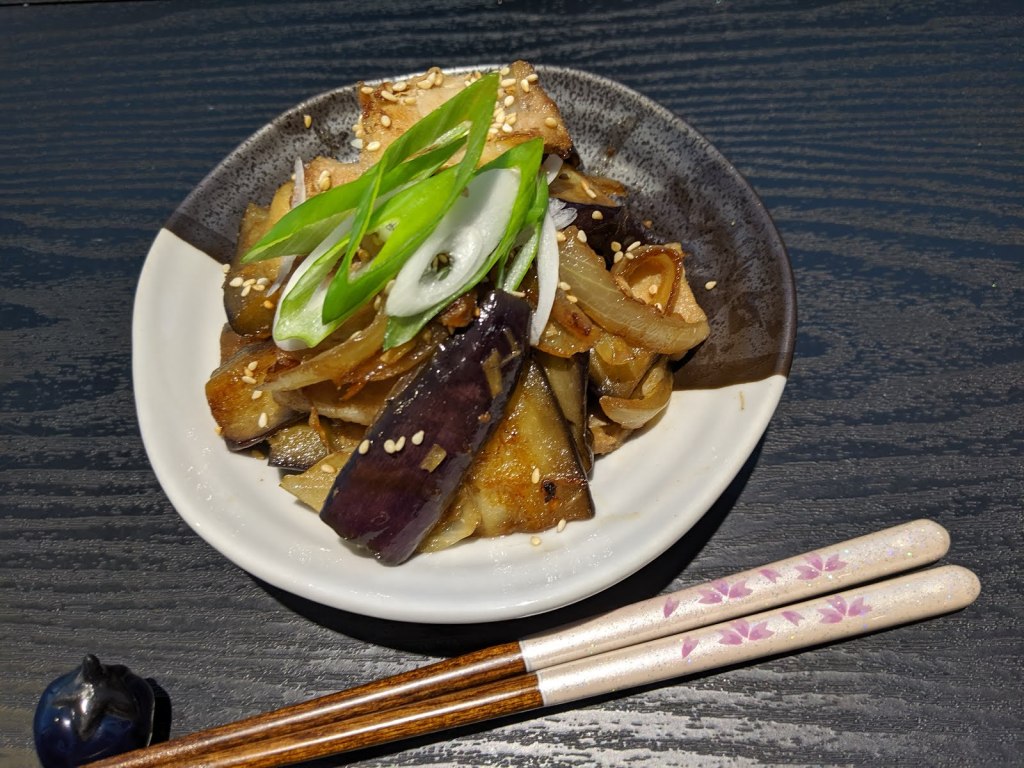
Ingredients
- Aubergine – 1 piece or 200g, chopped into small pieces
- Sliced Pork belly- chopped, 100g
- Onion – chopped, ½ piece or 75g
- Ginger – chopped in small pieces, 1 teaspoon
- Soy sauce – 1 tablespoon
- Mirin cooking wine – 1 teaspoon
- Sake cooking wine – 1 teaspoon
- Sesame seeds – 1 teaspoon
- Sunflower oil – 1 tablespoon
- Ground black pepper – 1 dash
Method
1. In a non-stick frying pan, add oil and fry the onions and pork for a few minutes over medium heat, stirring regularly.
2. Add aubergine to the pan and fry for a few more minutes.
3. Add soy sauce, ginger, sake, mirin and 50 mL of water and cook until aubergine gets brown and softer.
To serve: Sprinkle sesame seeds and add chopped spring onion (according to personal preference).
Nutritional Values Per Serving
| Kcal | Protein | Fat | Carbs | Fibre | Sugars | Salt | Saturated Fat | Vitamin B1 | Vitamin B3 | Vitamin B12 |
|---|---|---|---|---|---|---|---|---|---|---|
| 379.7 | 7.0g | 34.5g | 11.4g | 3.9g | 5.6g | 1.2g | 10.3g | 0.3mg | 3.3mg | 0.4μg |
| 19.0% | 14.1% | 49.3% | 4.4% | 13.1% | 6.3% | 20.0% | 51.7% | 33.7% | 25.2% | 28.0% |
Nutritional Tips
Pork is mainly made from mainly protein but also some part of the meat is made of a large amount of fat. Pork is generally rich in vitamins B1, B2, B3, B6 and B12, also a good source of phosphorus, zinc, and potassium. Cured pork products are very common (ham, bacon, and sausages), however, these products tend to contain a large amount of salt, saturated fat and preservatives. Therefore, it is important to consider which type of pork you are consuming. Lean pork contains less salt and fat, so you may consider adding it to your diet from time to time to achieve a healthier diet. Alternatively, you may cut the fat off before cooking and use less oil. In addition, roasting or grilling may be more beneficial than frying as you can use less oil and wash off the excess of oil while cooking. I believe making the right choices of food/cooking methods can help people to eat meat as part of a healthy, balanced diet although some meats are high in saturated fat, which can raise blood cholesterol levels.
Pork belly was used for this recipe, however, if it is replaced with pork loin, the nutritional values will be changed approximately as follows:
-Calories (-174kcal, 46% reduction, 205.7kcal – 10.3% of an adult’s daily reference intake)
-Total lipid (-22g, 64% reduction, 12.5g – 17.9% of an adult’s daily reference intake)
-Saturated Fat (-7.1g, 21% reduction, 2,2g – 10.8% of an adult’s daily reference intake)
-More protein, vitamin B1, B3, B6 and slightly less Vitamin B12
 Mignonne Nutri-Cuisine
I have a question… Do you have a recipe for a friend who wants to say he's sincerely and truly sorry if you felt he said anything offensive to you in anyway on another chatting app recently? Also, what he said wasn't directed towards you, and he really wants to make amends with you if it's at all possible Harukah.
LikeLike
I have a question… Do you have a recipe for a friend who wants to say he's sincerely and truly sorry if you felt he said anything offensive to you in anyway on another chatting app recently? Also, what he said wasn't directed towards you, and he really wants to make amends with you if it's at all possible Harukah.
LikeLike