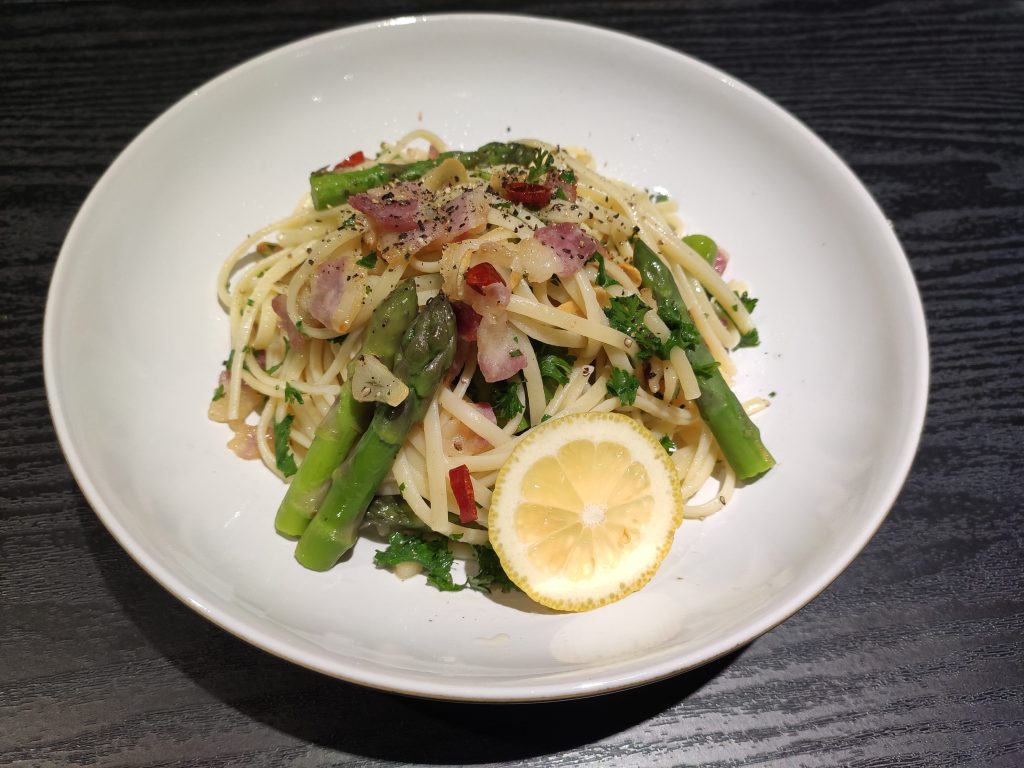
Description: Simple and tasty. For your little ones, this may help for them to eat vegetables.
Serves: 2
Cooking time: 25 minutes
Ingredients
- Pasta – 160g
- Asparagus – 230g, cut in 4 pieces
- Bacon – chopped, 40g or 2 rashers
- Garlic – chopped, 2 cloves
- Olive oil – 2 tablespoons
- Fresh parsley – chopped, 2 tablespoons
- Salt – 1 dash
- Ground black pepper – 2 dashes
- Dry chili – chopped, 1 piece
- Lemon – 1 slice
Method
1. Cook spaghetti to al dente in plenty of boiling water with salt. Steam asparagus separately in a separate pan.
2. When pasta is almost cooked, heat the olive oil in a large non-stick frying pan, then add garlic and bacon over low heat for a few minutes, stirring regularly.
3. Stir in the hot drained pasta, chili, salt and black pepper, change the heat to medium.
4. Add the asparagus and parsley to the frying pan. Mix well. If it needs a little more moisture, add a splash of the pasta-cooking water.
5. Squeeze lemon on top.
To serve: Sprinkle additional ground black pepper and parmesan cheese according to your preference.
Nutritional Values Per Serving
| Kcal | Protein | Fat | Carbs | Fibre | Sugars | Salt | Saturated Fat | Iron | Vitamin E |
|---|---|---|---|---|---|---|---|---|---|
| 519.4 | 19.0g | 21.7g | 65.5g | 5.7g | 4.0g | 0.8g | 3.0g | 6.1mg | 1.3mg |
| 26.0% | 37.9% | 31.0% | 25.2% | 19.1% | 4.4% | 12.9% | 15.0% | 40.9% | 44.5% |
Nutritional Tips
Asparagus is low in calories (20 kcal per 100g according to USDA) and consists of water more than 90%. Asparagus is a good source of fibre, folate, vitamins C, vitamin E and vitamin K. However, asparagus is quite a delicate vegetable with a short shelf life. Vitamin C is weak against the heat, easily destroyed by oxygen. In some countries, frozen asparagus is available, so you may consider buying frozen ones.
Frozen vegetables are usually frozen and packed after the harvest and they are fresh (at their peak of ripeness). Therefore, they are more likely to retain nutritional values. Sometimes they may be richer in nutritional values than others which have travelled across countries and stored for a long time before sitting on your table.
It is versatile and can be added to a variety of dishes, such as tempura, sauté, kushikatsu (Japanese fried skewer), wrap, salad, fried vegetables, pizza, pasta, etc.
 Mignonne Nutri-Cuisine