Description: Simple pasta at home. No sauce.
Serves: 2
Cooking time: 25 minutes
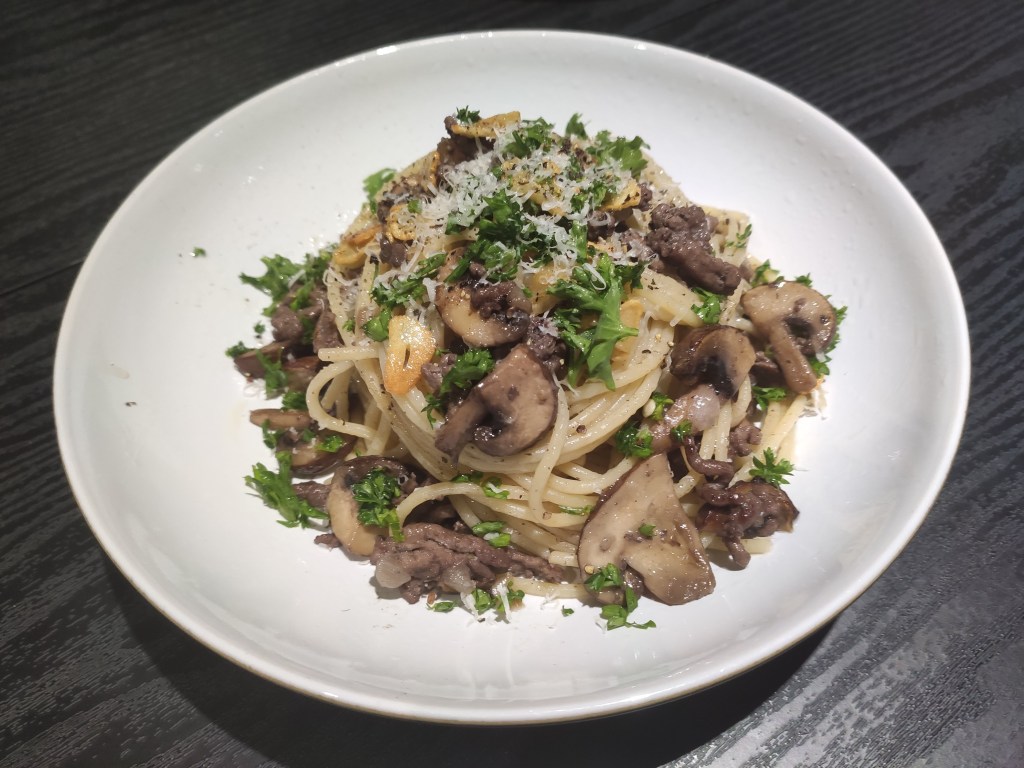
Ingredients
- Spaghetti – 160g
- Mushrooms – 240g
- Garlic – chopped, 2 cloves
- Beef mince (5%) – 120g
- Olive oil – 1 tablespoon
- Black pepper – ground, ½ teaspoon
- Salt – 2 dashes
- Red wine (dry) – 100 mL
- Parmesan cheese – 10g
- Parsley – chopped, 2 tablespoons
Method
1. Cook the spaghetti until al dente in plenty of boiling water with salt.
2. When pasta is almost cooked, heat the extra virgin olive oil in a large non-stick frying pan, then add the garlic over low heat for 30 seconds, stirring regularly. (if you like crispy garlic, cook a bit longer and leave them aside and sprinkle before serving).
3. Add the mushrooms and minced meat to the pan with salt and black pepper.
4. When the meat is almost cooked, add wine to the pan then cook until the ingredients absorb the wine.
5. Add the drained pasta to the frying pan. Mix well. If it needs a little more moisture, add a splash of the pasta-cooking water.
To serve: Sprinkle additional ground black pepper, parmesan cheese and top it with the chopped parsley.
Nutritional Values Per Serving
| Kcal | Protein | Fat | Carbs | Fibre | Sugars | Salt | Saturated Fat | Phosphorus | Zinc | Vitamin B3 |
|---|---|---|---|---|---|---|---|---|---|---|
| 523.6 | 28.0g | 12.9g | 66.8g | 3.9g | 3.9g | 0.7g | 2.2g | 316.7mg | 4.7mg | 13.8mg |
| 26.2% | 56.1% | 18.4% | 25.7% | 13.1% | 4.3% | 11.1% | 11.2% | 57.6% | 66.6% | 106.0% |
Nutritional Tips
Phosphorus is one of the essential minerals to our body. Phosphorus can be found mostly in our bones (approximately 80%) and the rest is distributed to other parts of the body. It plays an important role in our bone health and energy metabolism.
Phosphate is a part of adenosine triphosphate (ATP) and ATP provides energy to operate many functions in living cells (e.g: muscle contraction), it converts to adenosine diphosphate (ADP) or adenosine monophosphate (AMP) during metabolic processes. It also is a part of nucleic acids (DNA and RNA).
Some phosphate exists in some foods (e.g. plant foods: legumes, whole grain cereals). They are in phytic acid forms and inhibit absorption from our intestine by forming insoluble complexes with some minerals (Ca, Mg, Zn, Fe). So it may be beneficial for some individuals to eat meals separately instead of having a large meal once a day (eg. three times a day instead of twice a day).
 Mignonne Nutri-Cuisine