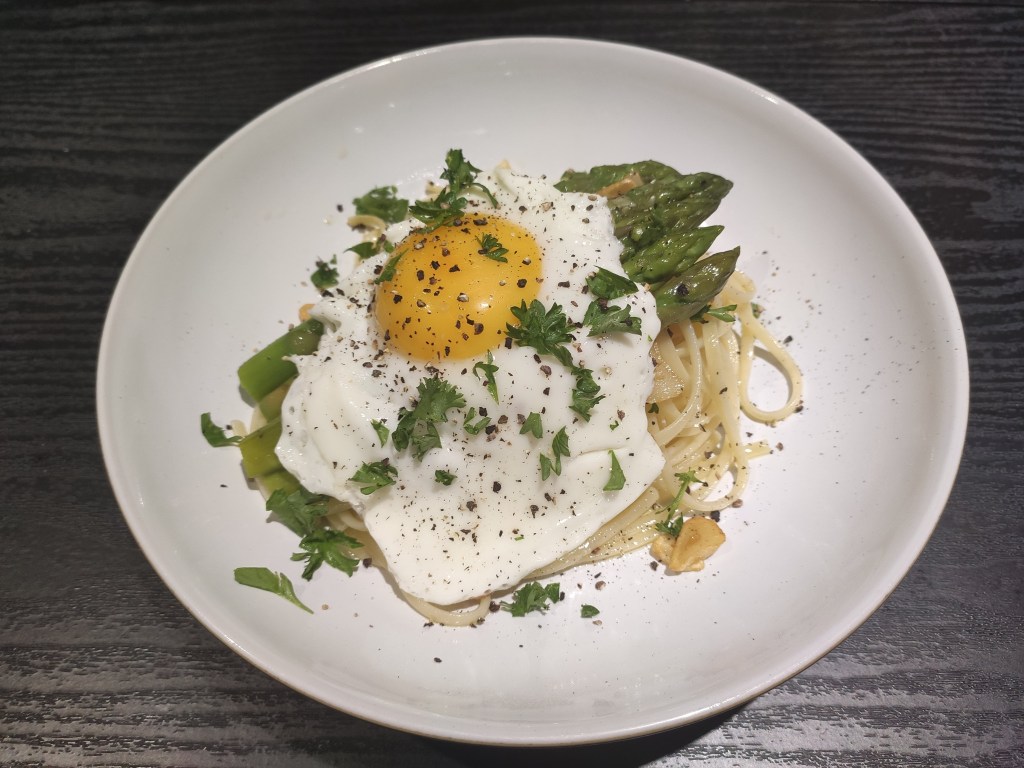
Description: What about this breakfast for your late weekend lunch?
Serves: 2
Cooking time: 15 minutes
Ingredients
- Linguine or Spaghetti – 160g
- Asparagus – chopped in 4 pieces, 160g
- Egg – 2 medium
- Garlic – chopped, 2 cloves
- Olive oil – 1 tablespoon
- Ground black pepper – 2 dashes
- Salt – 1 dash
- Fresh parsley – chopped, 1 tablespoon according to your preference
Method
1. Cook the pasta to al dente in plenty of boiling water with salt. Meanwhile, steam asparagus separately.
2. When the pasta is almost cooked, heat the olive oil in a large non-stick frying pan, then add the garlic over low heat for 30 seconds, stirring regularly.
3. Stir in the pasta and asparagus, change the heat to medium and cook for a couple of minutes. Then place it on a plate.
4. Cook the egg and place them on top of the pasta.
To serve: Sprinkle ground black pepper and parsley on top.
Nutritional values per serving
| Kcal | Protein | Fat | Carbs | Fibre | Sugars | Salt | Saturated Fat | Vitamin B2 | Vitamin E | Folate |
|---|---|---|---|---|---|---|---|---|---|---|
| 429.9 | 17.5g | 12.7g | 63.2g | 4.7g | 3.1g | 0.4g | 1.6g | 0.7mg | 1.4mg | 65.3μg |
| 21.5% | 35.1% | 18.2% | 24.3% | 15.7% | 3.5% | 6.0% | 7.8% | 62.1% | 46.1% | 32.6% |
*These values are approximate and based on the value from ingredients prepared before cooking (Reference USDA). Percent daily values are based on a 2,000 calorie diet. Your daily values may vary depending on your calorie needs. Iron, Zinc, Vitamin A, Vitamin B6 and Vitamin C are over 10%, Phosphorus and Vitamin B12 are over 20%, Vitamin B3 is over 50%, Vitamin B1 and Vitamin D are over 100% of an adult’s daily reference intake. However, some vitamins may be lost while cooking.
Nutritional Tips
Eggs provide high biological-value protein and eggs are rich in essential amino acids. Essential amino acids are
Phenylalanine, Tryptophan, Histidine, Methionine, Leucine, Valine, Threonine, lysine, Isoleucine and Arginine (just for children). Eggs have healthy fat even though it has saturated fat, health benefits are huge.
One egg contains about 5g fat, mostly unsaturated fat (including ω-3 fatty acid). About 1.5g of saturated fat and there is no trans fat. Eggs contain cholesterol. However, most cholesterol is made in our body from saturated fat, not dietary cholesterol. So adding eggs to your diet may be beneficial. It is recommended not more than 300mg of dietary cholesterols per day (https://www.nice.org.uk/guidance/cg181/chapter/1-recommendations) and may be less for those who are advised (https://www.heartuk.org.uk/downloads/health-professionals/factsheets/cholesterol—triglyceride-levels-conversion.pdf ) However, individuals with hyperlipidaemia/hypercholesterolaemia or any other conditions may need to seek professional advice.
 Mignonne Nutri-Cuisine