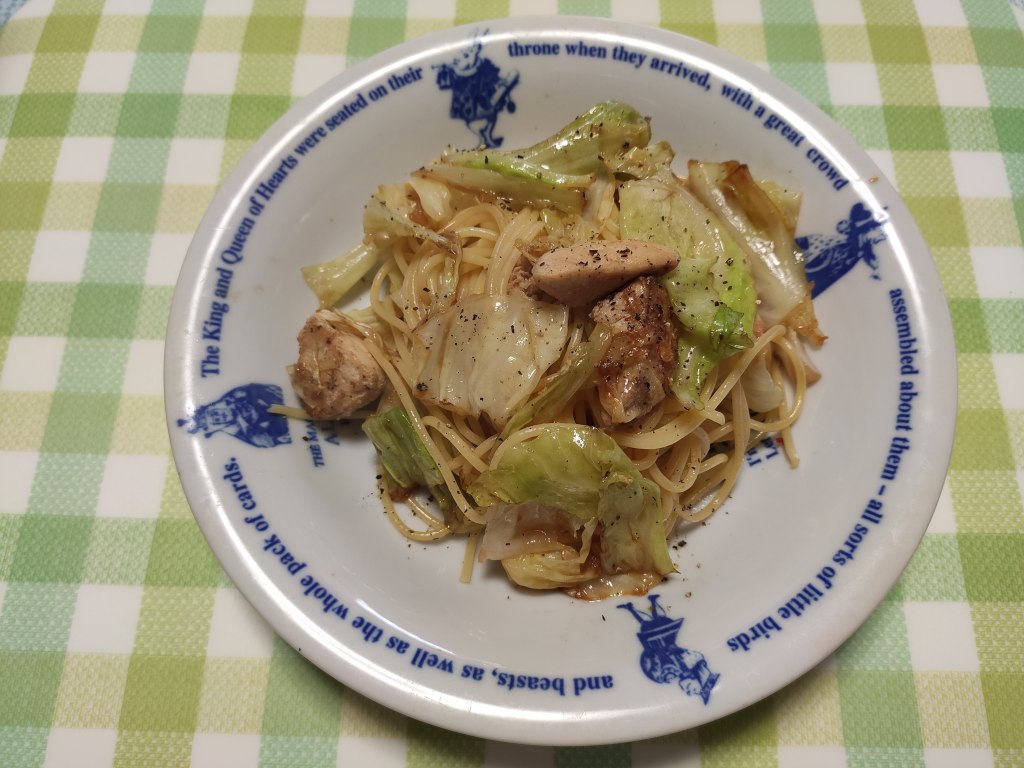
Description: Fancy a Japanese meal at home? Japanese style pasta with sake.
Serves: 2
Cooking time: 25 minutesIngredients
Ingredients
- Cabbage – tear in bite-size, 160g
- Chicken – cut in bite-size, 160g
- Garlic – chopped, 2 cloves
- Sunflower oil (alternatively, olive oil) – 1 tablespoon
- Sake cooking wine – 1 tablespoon
- Dry chili – chopped, 1 piece
- Ground black pepper – 2 dashes
Method
1. Heat the oil in a large non-stick frying pan, then add the garlic and chilli over low heat for 30 seconds, stirring regularly. (If you like crispy garlic, cook a bit longer, leave them aside and sprinkle before serving).
2. Stir in the chicken, chilli, and black pepper, change the heat to medium and cook until the chicken is almost cooked.
3. Add the cabbage, sake, 2 tablespoons of water and cook until the chicken is completely cooked.
Nutritional Values Per Serving
| Kcal | Protein | Fat | Carbs | Fibre | Sugar | Salt | Saturated Fat | Vitamin B3 | Vitamin B6 |
|---|---|---|---|---|---|---|---|---|---|
| 556.3 | 24.4g | 21.8g | 64.9g | 5.0g | 4.4g | 0.3g | 4.2g | 9.6mg | 0.4mg |
| 27.8% | 48.9% | 31.2% | 25.0% | 16.8% | 4.9% | 5.0% | 20.8% | 74.0% | 34.5% |
Nutritional Tips
In Japan, there are 4 clear seasons (spring, summer, autumn, and winter) and people like to enjoy each season’s specialities. So this fish is one of the winter specialities. In winter, Hakusai cabbage, spring onions, pumpkins, daikon radish, burdock roots, carrots, lotus roots, yam, sweet potatoes, potatoes, fugu (a type of fish which requires a special method to remove its poison), cod, flatfish and porgy are popular. But thanks to human knowledge, effort and techniques in recent years, you can get most of the food in different seasons. While I am in the UK, I can eat most of the ingredients throughout the year (imported food from abroad where seasons are different or grown in a controlled environment). In Japan, we see much less non-seasonal food in the supermarket and it is more expensive than usual. Therefore, people appreciate seasonal food as they are cheaper, and delicious and enjoy every season accordingly. I like how it is in Japan when the food is seasonal, they are incredibly tasty. But at the same time, having any type of food all year long is not bad.
The combination of cabbage with pasta may sound a little weird to some people. However, this combination with Japanese seasonings (sake is a key in this recipe) is actually better than you can imagine. Instead of using white wine, why don’t you try using sake for fancy Japanese pasta? Of course, you can use white wine for this recipe. But to understand Japanese flavours, you need to try th
 Mignonne Nutri-Cuisine