Description: Carb free canapé. Can be served as canapé or finger food for parties, appetizers, and side dishes. You can prepare it in advance and chill it in the fridge before serving.
Serves: 16 pieces
Cooking time: 10 minutes
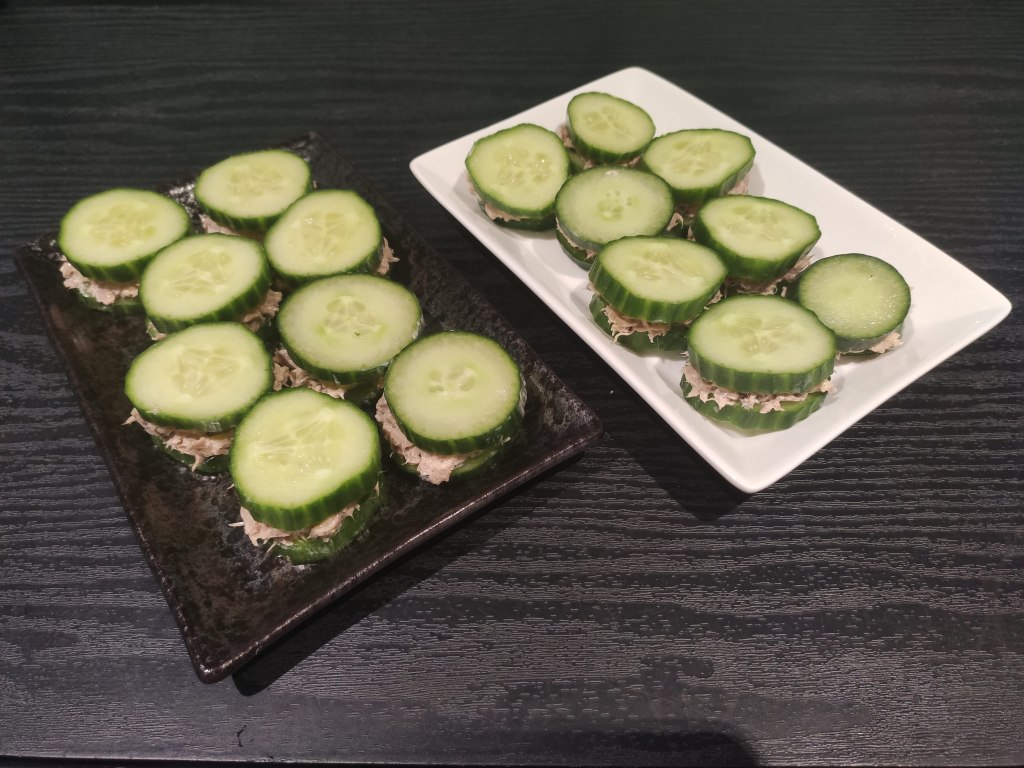
Ingredients
- Cucumber – chopped in about 5 mm thick, 200g (I had 32 slices to make 16 pieces of sandwiches)
- Tuna – break into small chunks, 1 tin (use no drain, if not remove oil before cooking) or 110g
- Mayonnaise – 1 tablespoons
- Ground black pepper – ½ teaspoon
Method
1. In a small bowl, mix tuna, mayonnaise and black pepper.
2. Sandwich the tuna mixture (about 1-2 teaspoons depending on the cucumber diameter) with the cucumber slices.
Nutritional Values Per Serving
| Kcal | Protein | Fat | Carbs | Fibre | Sugars | Salt | Saturated Fat | Vitamin B12 |
|---|---|---|---|---|---|---|---|---|
| 82.8 | 7.7g | 4.9g | 2.0g | 0.3g | 0.9g | 0.3g | 0.8g | 0.6μg |
| 4.1% | 15.4% | 7.0% | 0.8% | 1.1% | 1.0% | 5.5% | 3.9% | 40.6% |
Nutritional Tips
This dish is carb-free (really low carb content), therefore it makes it easier for those who need to count carbs. In general, mayonnaise is high in fat, so even though we say no carb, fat content might contribute to higher calories if eaten in a large amount. You may consider using light (reduced fat) mayonnaise.
“Kewpie Mayonnaise” may be one of the well-known Japanese mayonnaise. They are more yellow compared to other mayonnaise as only yellow yolk is used. It tastes a bit more sour compared to others. Mayonnaise is simply made of oil, egg yolk (some contain whole), and acid (vinegar or lemon juice). In France, they mix with mustard. The process of making mayonnaise is quite fascinating. But do not forget, mayonnaise is basically fat.
Tinned tuna is a good source of protein, vitamin B, omega-3 fatty acids, and phosphorus. They are tinned with sunflower oil, spring water, or olive oil. Omega-3 fatty acids may be beneficial in helping to reduce cardiovascular disease risks such as reducing blood cholesterol, and blood pressure and improve heart health (Nejad and Bikdeli, Tanaffos. 2014; 13(1): 6–14. ).
 Mignonne Nutri-Cuisine