Description: Refreshing vegetable 5-a-day pasta.
Serves: 2
Cooking time: 25 minutes
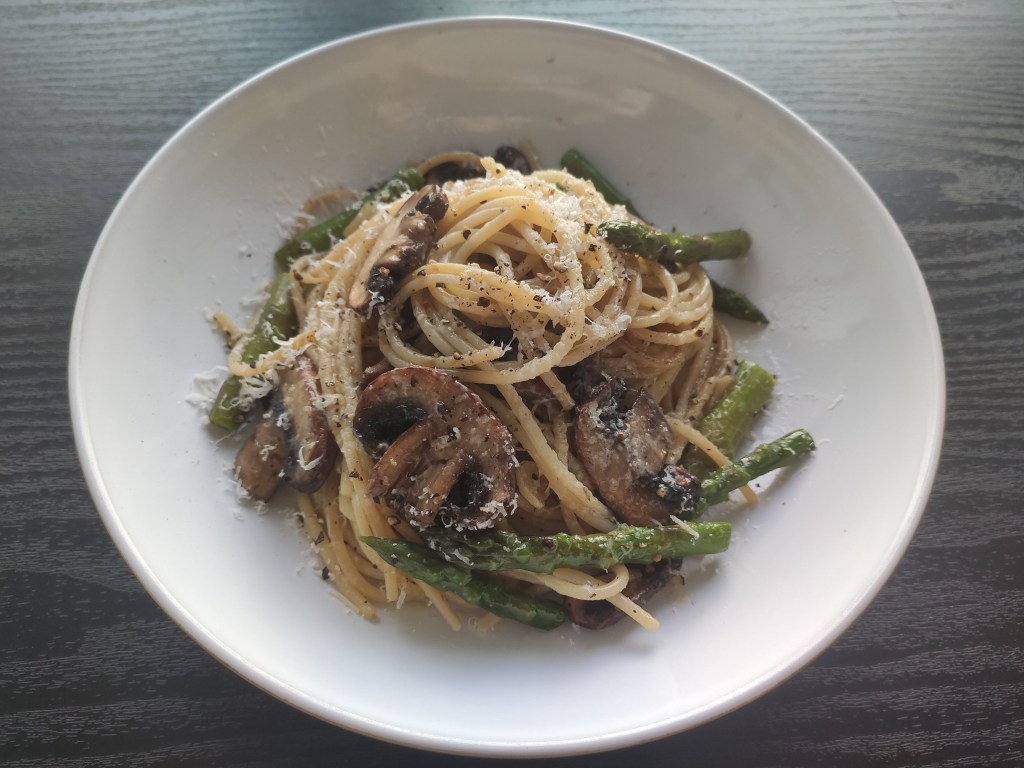
Ingredients
- Spaghetti – 140g
- Mushrooms – chopped, 160g
- Asparagus – cut into 5cm length, 50g
- Garlic – pureed, 2 cloves
- Olive oil – 2 tablespoons
- Salt – 2 dashes
- Ground black pepper – 2 dashes
- Grated parmesan cheese – 10g
- Lemon – sliced, 1 piece
Method
1. Cook the spaghetti to al dente in plenty of boiling water with salt. Meanwhile, steam the asparagus and put it aside.
2. When the pasta is almost cooked, heat the olive oil in a large non-stick frying pan, then add garlic over low heat for 30 seconds, stirring regularly.
3. Stir in the mushroom, salt and black pepper, and change the heat to medium.
4. Add the hot drained pasta and asparagus to the frying pan. Mix well. If it needs a little more moisture, add a splash of the pasta-cooking water.
5. Squeeze the lemon on top.
To serve: Sprinkle additional ground black pepper and parmesan cheese.
Nutritional Values Per Serving
| Kcal | Protein | Fat | Carbs | Fibre | Sugars | Salt | Saturated Fat | Vitamin B2 | Vitamin B3 | Vitamin D |
|---|---|---|---|---|---|---|---|---|---|---|
| 453.5 | 14.6g | 16.8g | 64.5g | 4.1g | 3.4g | 0.5g | 1.1g | 0.8mg | 9.0mg | 3.4IU |
| 22.7% | 29.2% | 24.0% | 24.8% | 13.6% | 3.8% | 9.2% | 5.3% | 73.8% | 69.5% | 33.5% |
Nutritional Tips
Vitamin D is one of the essential vitamins for our body and is involved in steroid hormones and musculoskeletal health. Vitamin D has different forms. For example, vitamin D2 (plants/fungi: ergocalciferol) and vitamin D3 (cholecalciferol: mostly found in animal sources). The D3 form is more effective than D2, although D2 is still good.
Generally, vitamin D can be produced under the skin in the presence of UV light. However, the diet is important when people have inadequate sunlight exposure (winter latitude, time of year, clothing, elderly). Good sources are cereals, eggs, fat spreads (fortified), yoghurt, meat/meat products, fish (mackerel, herring, sardines, tuna), cod liver oil and mushrooms (if grown under UV light).
 Mignonne Nutri-Cuisine