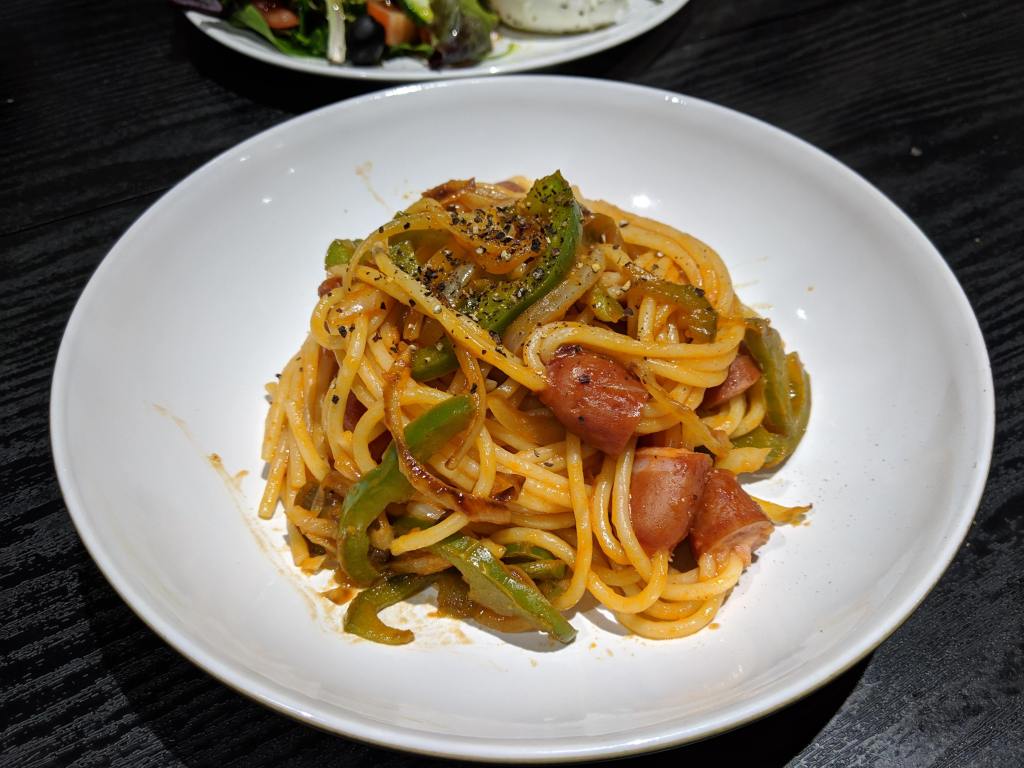
Description: The taste of nostalgic Japanese traditional cafe “kissaten”.
Serves: 2
Cooking time: 25 minutes
Ingredients
- Spaghetti – 160g
- Sausage – cut into 4 small pieces, 160g or 8 pieces
- Garlic – chopped, 1 clove
- Onion – 1 piece or 150g
- Green pepper – sliced, ½ piece or 80g
- Olive oil – 1 tablespoon
- Ground black Pepper – 2 dashes
- Tomato ketchup – 3 tablespoons
Method
1. Thread 4-5 noodles in each slice of sausage.
2. Cook the spaghetti until al dente in plenty of boiling water with salt.
3. Meanwhile, heat a large non-stick frying pan, then add the olive oil, garlic, onion, green pepper over medium heat stirring regularly.
4. Add the ketchup and black pepper to the pan.
5. Once the sauce is cooked, add the drained pasta to the frying pan. Mix well. If it needs a little more moisture, add a splash of the pasta-cooking water.
To serve: Sprinkle additional ground black pepper and parmesan cheese.
Nutritional Values Per Serving
| Kcal | Protein | Fat | Carbs | Fibre | Sugars | Salt | Saturated Fat | Vitamin B2 | Vitamin B3 | Vitamin B6 |
|---|---|---|---|---|---|---|---|---|---|---|
| 666.6 | 26.2g | 30.4g | 74.8g | 4.9g | 11.2g | 2.1g | 7.3g | 0.6mg | 11.2mg | 0.4mg |
| 33.3% | 52.5% | 43.4% | 28.8% | 16.4% | 12.5% | 35.8% | 36.3% | 52.2% | 86.2% | 31.0% |
Nutritional Tips
“Napolitan” is one of the popular Japanese pasta dishes. Pasta is used but not in the Italian way of cooking. The dish is generally prepared with spaghetti, tomato ketchup, green peppers, sausage (alternatively, bacon or ham) and onion. Some may even add Tabasco. It is kind of sweet but a bit nostalgic to me as recently fewer people eat lunch in these types of cafes. Many go there to have tea or even go to other modern cafes more often. Sadly, this old culture is a little bit fading away. However, this is one of my memories with my grandparents that they loved going there every day to read the newspaper and have coffee with a little toast and eggs. They didn’t even talk much while reading separate newspapers and I didn’t know why they loved it, but now I understand why.
This dish is commonly served in the traditional Japanese cafe “Kissaten” where there are waiters and waitresses. Unlike modern cafes such as Starbucks, they provide proper restaurant-level services. People often go there to have breakfast, brunch or lunch, but some may go for dinner as well. But menus are different among restaurants and they tend to serve less complicated meals such as pasta, karaage-set menu, curry and rice (not a course meal). There is also a ready-made package of this dish sold in the supermarket.
 Mignonne Nutri-Cuisine