Description: Nothing special but somewhat tastes like a Japanese izakaya dish. Convenient for cooking a large amount and keeping for the following days.
Serves: 2
Cooking time: 40 minutes
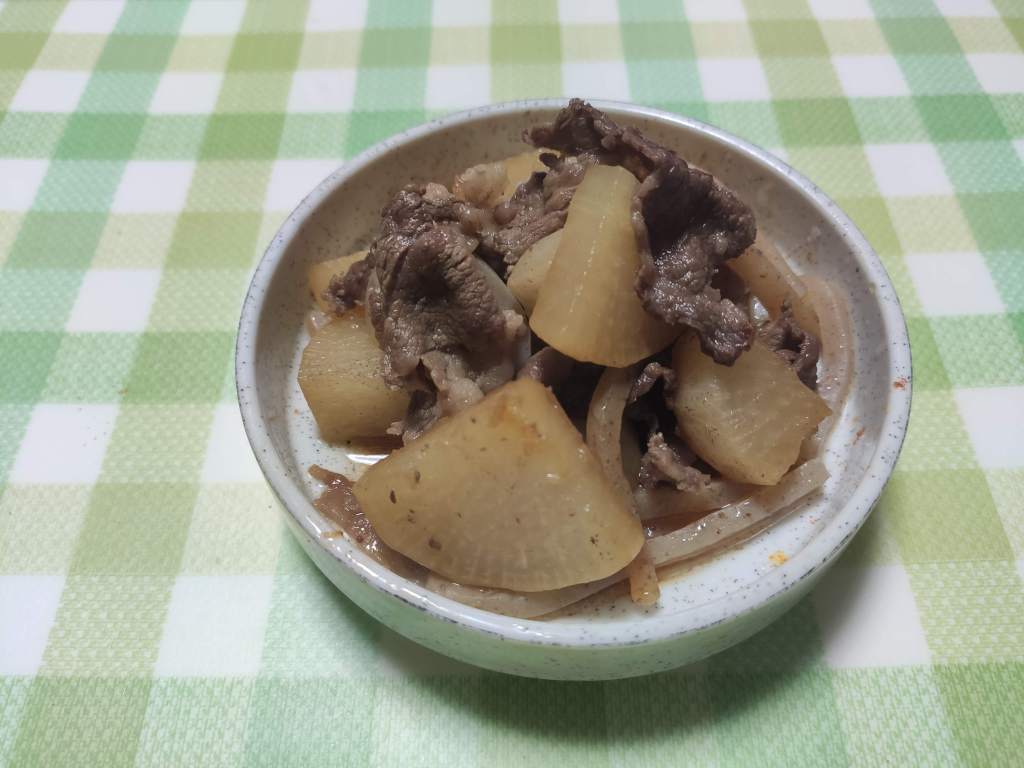
Ingredients
- Thinly sliced beef – 150g
- Daikon radish – chopped into quarter slice (1cm width), 200g
- Konnyaku – 1 piece/pack or 250g
- Soy sauce – 1 tablespoon
- Mirin cooking wine – 1 tablespoon
- Dashi stock – 300 mL of bonito or kombu kelp dashi stock (You may cook it from scratch – boil the water, switch the heat off, then add 25g of bonito flake wait for 3 minutes, then sieve them with kitchen paper or fine cloth. Alternatively, use extract dashi powder 4g + 150 mL of hot water)
- Water 400 mL
Method
1. In a large pot, add the water, dashi, soy sauce, and mirin, then boil on medium heat. Once it is boiled, add the daikon radish and simmer for about 20 minutes.
2. Add the beef and cook for another 20 minutes until the radish softens.
3. You may leave it until the flavours are absorbed into the ingredients.
Nutritional Values Per Serving
| Kcal | Protein | Fat | Carbs | Fibre | Sugars | Salt | Saturated Fat | Zinc | Vitamin B6 | Vitamin B12 |
|---|---|---|---|---|---|---|---|---|---|---|
| 198.8 | 18.2g | 9.7g | 10.9g | 4.4g | 4.5g | 1.6g | 3.9 g | 3.0mg | 0.5mg | 0.8μg |
| 9.9% | 36.4% | 13.8% | 4.2% | 14.7% | 5.0% | 25.9% | 19.4 % | 43.0% | 41.5% | 52.5% |
Nutritional Tips
It looks like it takes such a long time to cook, but it just needs to be simmered for a long time. This can be eaten hot in winter or chilled in summer. You can also cook a large amount and eat it the next day or bring it in your lunch box the next day. Ingredients absorb the taste in time, so it gets even tastier the next day. This is well-known in Japanese cuisine and sometimes we leave the dish on purpose so the flavors infuse into the ingredients.
You may also add more konnyaku to lower the energy content.
 Mignonne Nutri-Cuisine