Description: Simple spaghetti with cream and cheese. Simple but really tasty.
Serves: 2
Cooking time: 20 minutes
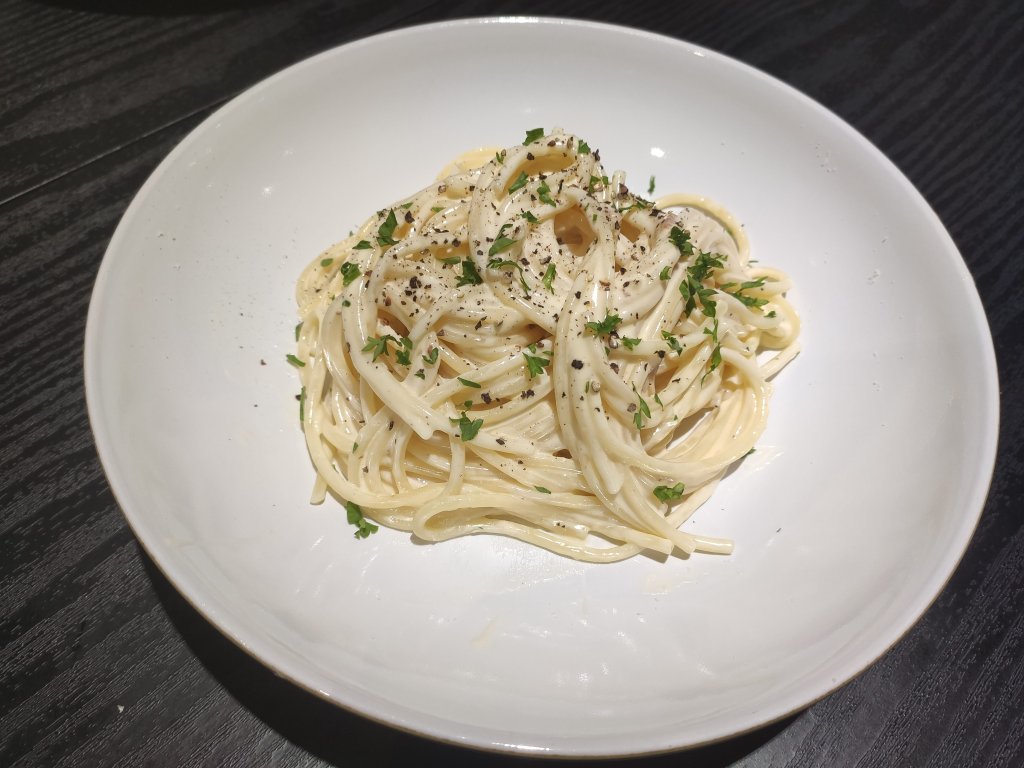
Ingredients
- Spaghetti – 180g
- Single cream – 150ml
- Unsalted butter – 5g
- Garlic – chopped, 2 cloves
- Ground black pepper – 2 dashes
- Grated parmesan cheese – 40g
- Salt – 1 dash
- Parsley – chopped, 1 teaspoon
Method
1. Cook the pasta until al dente in plenty of boiling water with salt.
2. When the pasta is almost cooked, heat the unsalted butter in a large non-stick frying pan, then add the garlic over low heat for 30 seconds, stirring regularly. (if you like crispy garlic, cook a bit longer leave them aside and sprinkle before serving).
3. Add the cream to the pan, cook it with medium heat, then stop the heat before it boils.
4. Add the hot drained pasta, and parmesan cheese and mix well.
To serve: Sprinkle ground black pepper and parsley.
Nutritional Values Per Serving
| Kcal | Protein | Fat | Carbs | Fibre | Sugars | Salt | Saturated Fat |
|---|---|---|---|---|---|---|---|
| 559.6 | 21.1g | 22.1g | 69.2g | 3.7g | 3.2g | 0.8g | 12.8g |
| 28.0% | 42.2% | 31.6% | 26.6% | 12.4% | 3.6% | 13.9% | 64.0% |
Nutritional Tips
Fat is the most concentrated form of energy in the diet (9 kcal/g) while carbohydrates and proteins are only 4 kcal/g.
Fats can be important as an energy store (adipose tissue), body temperature control (thermal effect), cushioning/protection, steroid hormone precursor (e.g. vitamin D), essential fatty acids (EFAs), carrier of fat-soluble vitamins (A, D, E, K), main constituents of cell membranes (cholesterol and phospholipids) and are involved in bile acid production.
However, there are different types of fats which are considered as “good fats” and “bad fats”. We enjoy fat from time to time but it is important to pay attention to saturated fat and trans-fat as these are considered bad ones.
 Mignonne Nutri-Cuisine