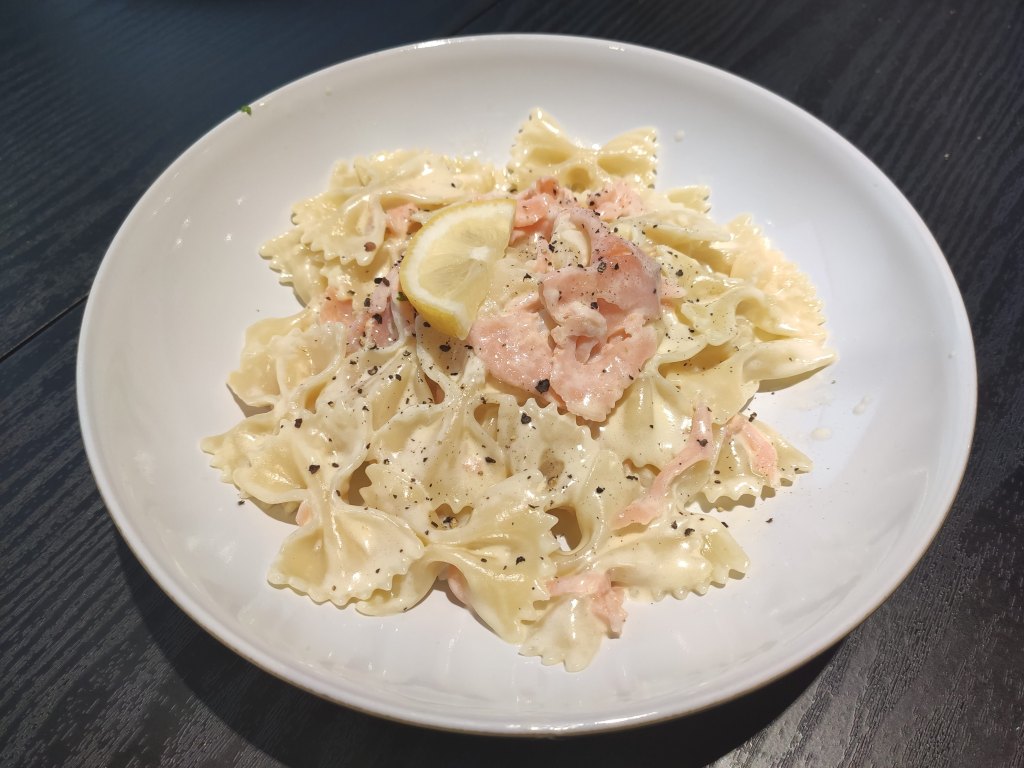
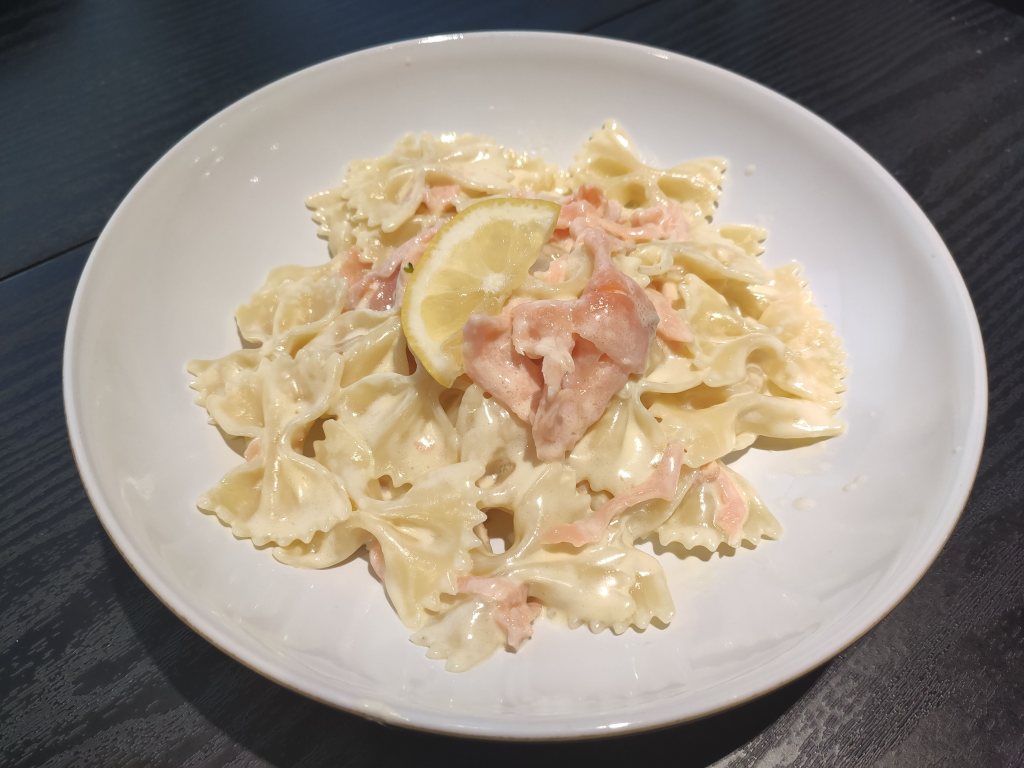
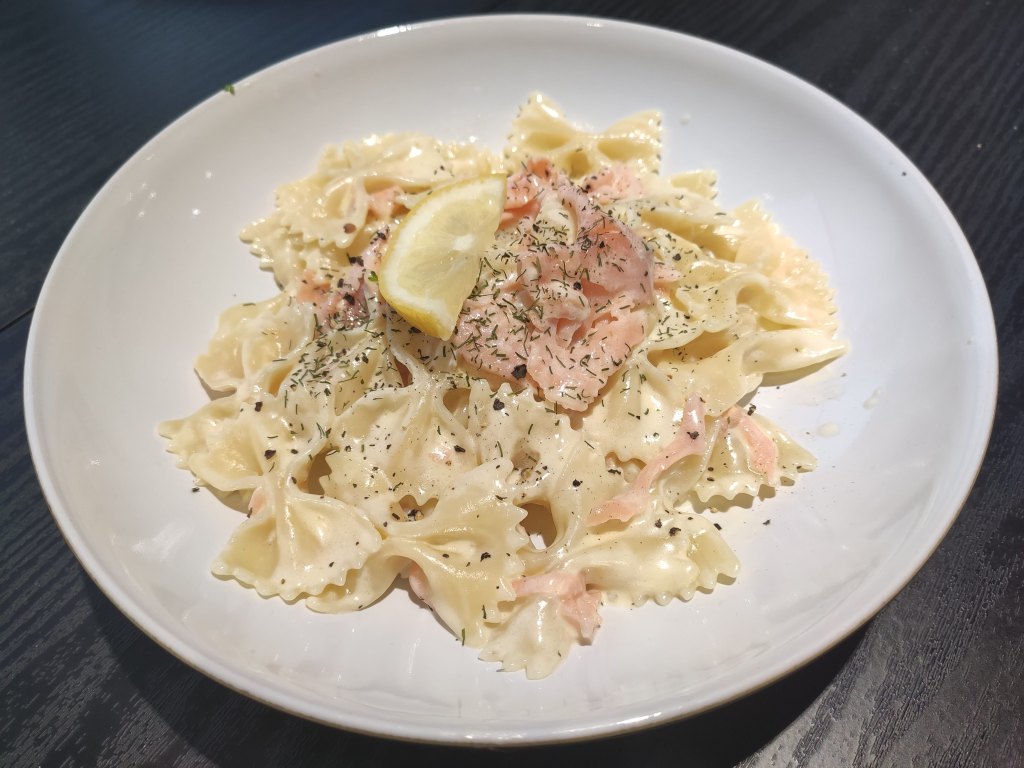
Description: A flavour of lemon and dill adds freshness to pasta.
Serves: 2
Cooking time: 20 minutes
Ingredients
- Farfalle – 180g
- Smoke salmon – 100g
- Single cream – 150ml
- Unsalted butter – 5g
- Garlic – chopped, 2 cloves
- Ground black pepper – 2 dashes
- Dill (dry) – ½ teaspoon
Method
1. Cook the pasta until al dente in plenty of boiling water.
2. When the pasta is almost cooked, heat a large non-stick frying pan over a medium heat, then cook the garlic for 30 seconds.
3. Add the cream in medium heat and stop before it boils.
4. Add the smoked salmon and the hot drained pasta
To serve: sprinkle ground black pepper and dill.
Nutritional Values Per Serving
| Kcal | Protein | Fat | Carbs | Fibre | Sugars | Salt | Saturated Fat | Vitamin B2 | Vitamin B3 |
|---|---|---|---|---|---|---|---|---|---|
| 540.3 | 23.1g | 19.3g | 68.7g | 3.7g | 3.2g | 0.9g | 10.3g | 0.5mg | 8.8mg |
| 27.0% | 46.2% | 27.5% | 26.4% | 12.5% | 3.6% | 14.9% | 51.5% | 42.2% | 67.8% |
Nutritional Tips
Fatty acids have different structures depending on the number of carbon and hydrogen atoms. When hydrogen atoms are missing, C atoms form double bonds.
Saturated FAs (SFA): no double bonds
Monounsaturated FAs (MUFA):1 double bond (2 missing hydrogen atom)
Polyunsaturated FAs (PUFA): 2 or more double bonds (4 or more missing hydrogen atom)
The chain length can be following;
1. Short chain: less than 8 carbons
2. Medium chain: 8-12 carbons
3. Long chain: more than 14 carbons, very long chain: more than 22 carbons
Most (but not all) are even numbers. Fatty acids with longer chains and more saturation (hydrogenation) mean a higher melting point (MP). Therefore, more likely to be solid at room temperature (e.g. butter) while sunflower oil is liquid.
 Mignonne Nutri-Cuisine