Description: Japanese-style pork sauté. The mixture of the spicy taste of ginger and fresh green pepper makes a nice combination. Not only does it perfectly match with rice, but also it does with quinoa.
Serves: 2
Cooking time: 15 minutes
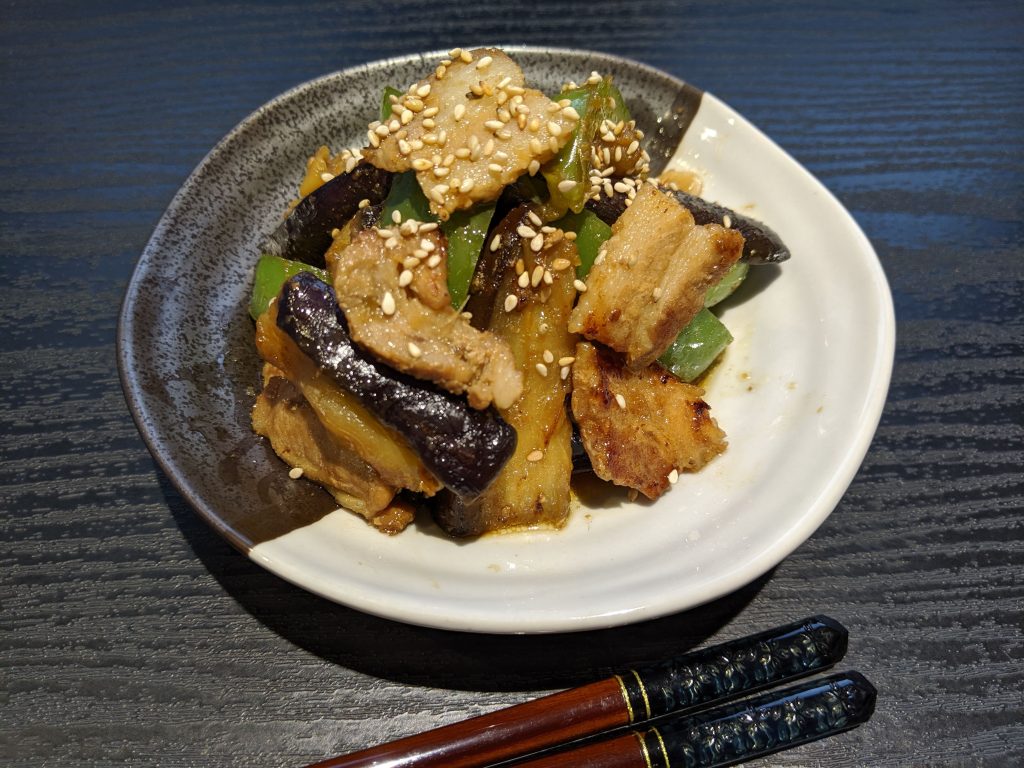
Ingredients
- Aubergine – 1 piece or 200g, chopped into small pieces
- Sliced Pork belly- chopped, 100g
- Green Pepper – chopped, ½ piece or 50g
- Ginger – chopped into small pieces, 5g
- Soy sauce – 1 tablespoon
- Mirin cooking wine – 1 teaspoon
- Sake cooking wine – 1 teaspoon
- Sesame seeds – 1 teaspoon
- Sunflower oil – 1 tablespoon
- Ground black pepper – 1 dash
Method
1. In a non-stick frying pan, add oil and fry the pork for a few minutes over medium heat, stirring regularly.
2. Add aubergine to the pan and fry for a few more minutes.
3. Add green pepper, soy sauce, ginger, sake, mirin and 50 mL of water and cook until aubergine gets brown and softer.
To serve: Sprinkle sesame seeds.
Nutritional Values Per Serving
| Kcal | Protein | Fat | Carbs | Fibre | Sugars | Salt | Saturated Fat | Vitamin B1 | Vitamin B3 | Vitamin B12 |
|---|---|---|---|---|---|---|---|---|---|---|
| 369.7 | 6.8g | 34.5g | 9.0g | 3.7g | 4.7g | 1.2g | 10.3g | 0.3mg | 3.4mg | 0.4μg |
| 18.5% | 13.7% | 49.3% | 3.5% | 12.4% | 5.2% | 20.0% | 51.6% | 33.3% | 25.8% | 28.0% |
Nutritional Tips
The pork belly was used for this recipe, however, if it replaced with pork loin, nutritional values will be changed approximately as follows:
– Calories (-174kcal, 46% reduction, 195.7kcal – 10.3% of an adult’s daily reference intake)
– Total lipid (-22g, 64% reduction, 12.5g – 17.9% of an adult’s daily reference intake)
– Saturated Fat (-7.1g, 21% reduction, 2,2g – 10.8% of an adult’s daily reference intake)
– More protein, vitamin B1, B3, B6 and slightly less Vitamin B12
Lean pork contains less fat, so you may consider adding it to your diet from time to time to achieve a healthier diet. Alternatively, you may cut the fat off and use less oil for cooking.
Green pepper is also a good source of vitamin C. People would come up with the equation of “vitamin C = orange”, however, it can be found in various foods such as tomatoes, lotus roots, red/yellow/green peppers, strawberries, blackcurrants, broccoli, brussels sprouts, potatoes etc. Green pepper is low in calories (20 kcal per 100g according to USDA) and consists of water more than 90%. It is versatile and can be added to a variety of dishes with or without cooking, such as tempura, salad, fried vegetables, fried rice, pizza, pasta, fried udon, curry, minced hamburger steak etc. Vitamin C is known for being non-resistant against heat, therefore if you are thinking of taking vitamin C from green pepper, eating it raw would be the best and cutting it just before you eat to maximise the nutritional benefit. I would say green pepper is one of the suitable weight control vegetables, so you can add it to different dishes cooked or raw. It is important to prepare it with different cooking methods so that you can enjoy the meal and achieve a balanced diet.
 Mignonne Nutri-Cuisine