Description: Easy to prepare. When you run out of fresh leafy salad vegetables but you want to prepare some greens on the table, this can be one of your vegetables. You can use frozen broccoli too.
Serves: 2
Cooking time: 20 minutes
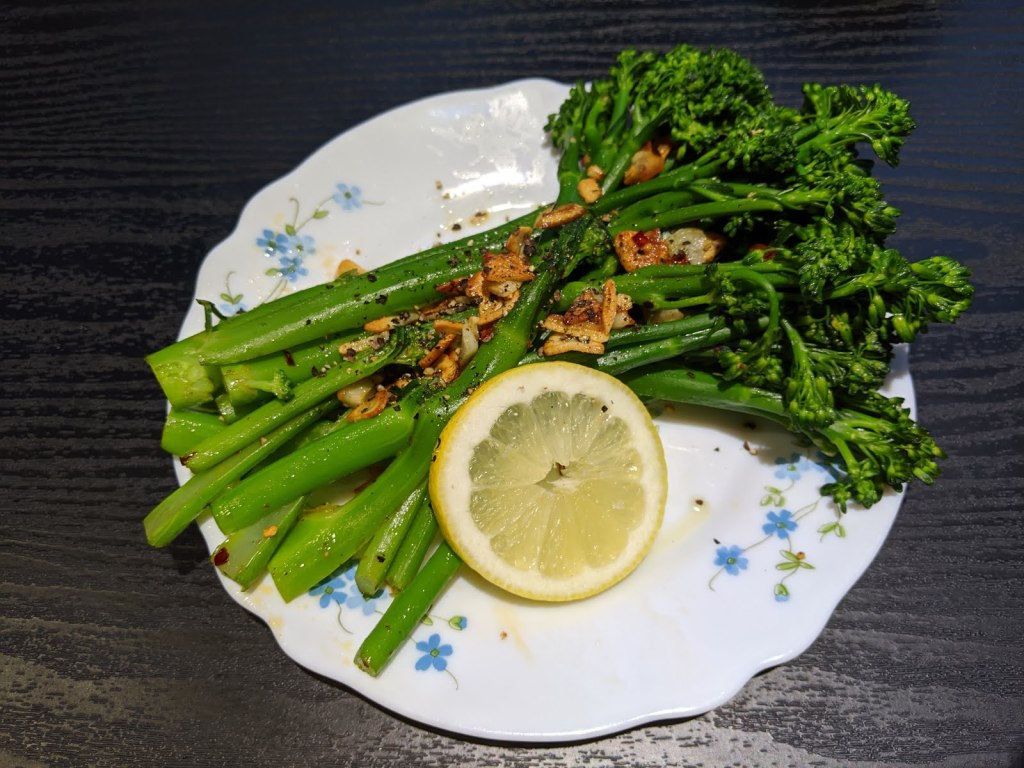
Ingredients
- Tender stem broccoli – cut in half, 100g (no need to cut if the stem is thin enough to cook easily)
- Garlic – chopped, 4 pieces
- Dry chilli – 1 piece
- Unsalted butter – 10g
- Salt – ¼ dash
- Ground black pepper – ¼ dash
Method
1. Steam the broccoli.
2. Heat the butter in a large non-stick frying pan, then add garlic over low heat for 30 seconds, stirring regularly (if you like crispy garlic, cook a bit longer, leave them aside and sprinkle before serving).
3. Stir in broccoli, salt and black pepper, change the heat to medium.
4. When the sauce coats the broccoli, serve them.
To serve: sprinkle additional black pepper or squeeze lemon.
Nutritional Values Per Serving
| Kcal | Protein | Fat | Carbs | Fibre | Sugars | Salt | Saturated Fat | Vitamin C | Folate |
|---|---|---|---|---|---|---|---|---|---|
| 62.9 | 1.8g | 4.1g | 5.6g | 1.5g | 1.0g | 1.0g | 1.9g | 46.5mg | 31.7μg |
| 3.1% | 3.6% | 5.9% | 2.1% | 5.1% | 1.2% | 1.5% | 14.6% | 116.2% | 15.9% |
Nutritional Tips
100g of Broccoli is only 34 kcal (according to USDA). It is slightly more than a handful but is super low in calories.
Broccoli is rich in vitamin C, vitamin K and folate. Folate is known as vitamin B9 as well. A man-made form of folate is known as folic acid. So when you see supplements or fortified foods, you will see them as folic acid. Both have the same effects and they are essential to our body.
When deficiency occurs, it will cause an elevation of homocysteine in the body. High homocysteine levels may be associated with an increased risk of heart disease. Additionally, pregnant women are required to have an additional intake of folate/folic acid to avoid birth defects (such as neural tube defects).
 Mignonne Nutri-Cuisine