Description: Very soft and melting in the mouth. You can cook a large amount and eat it the next day. This can be served hot or cold. It perfectly goes well with rice or a side dish as the izakaya-style meal.
Serves: 2
Cooking time: 20 minutes
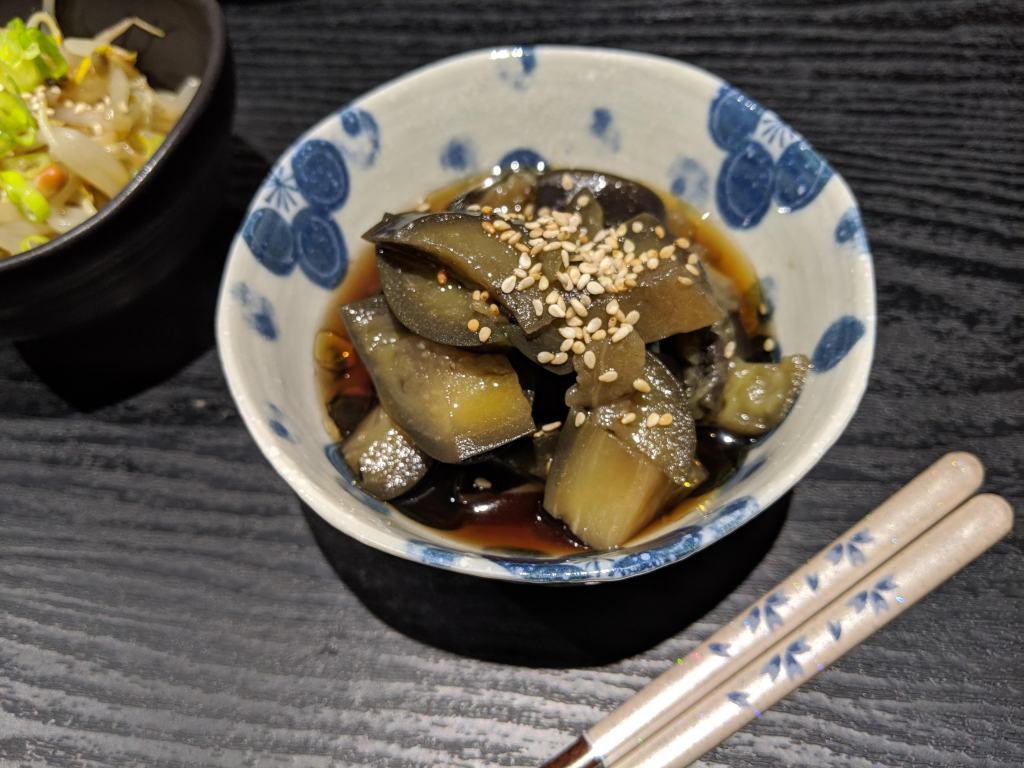
Ingredients
- Aubergine – 1 piece or 200g, chopped into small pieces
- Soy sauce – 1 tablespoon
- Mirin cooking wine – 2 teaspoons
- Sake cooking wine – 2 teaspoons
- Dashi stock – 300 mL of bonito or kombu kelp dashi stock (You may cook it from scratch – boil the water, switch the heat off, then add 15g of bonito flake wait for 3 minutes, then sieve them with kitchen paper or fine cloth. Alternatively, use extract dashi powder 1g + 300 mL of hot water)
- Sesame seeds – 1 teaspoon
- Sesame oil – 1 teaspoon
Method
1. In a pot, add dashi stock, soy sauce, Mirin, Sake and the aubergine then simmer on medium heat.
2. Keep adding some water until the aubergine gets softer and absorbs the taste of the soup.
3. Add sesame oil and sprinkle sesame seeds.
Nutritional Values Per Serving
| Kcal | Protein | Fat | Carbs | Fibre | Sugars | Salt | Saturated Fat |
|---|---|---|---|---|---|---|---|
| 72.0 | 2.3g | 3.2g | 9.1g | 3.2g | 5.1g | 1.3g | 0.5g |
| 3.6% | 4.6% | 4.6% | 3.5% | 10.8% | 5.6% | 21.8% | 2.3% |
Nutritional Tips
Antioxidants are substances which are believed to protect your cells against free radicals damage. The damage to cell membranes, proteins including DNA may lead to cancer. It is still a fairly new topic, so it may not be possible to conclude that increased dietary intake of antioxidants alone reduces the risk of heart disease or cancer. However, some studies show their protective effects on our bodies.
“Nasunin” (it is one type of anthocyanin, which can be found in its skin and purple colour) is known as a potential antioxidant of aubergine and a free radical scavenger, which protects brain cell membranes (Noda et al, Research Communications in Molecular Pathology and Pharmacology, 1998 Nov;102(2):175-87 ). These membranes have a function to evacuate waste out of the cells and let nutrients in. So why don’t you add aubergine to your diet sometimes?
 Mignonne Nutri-Cuisine