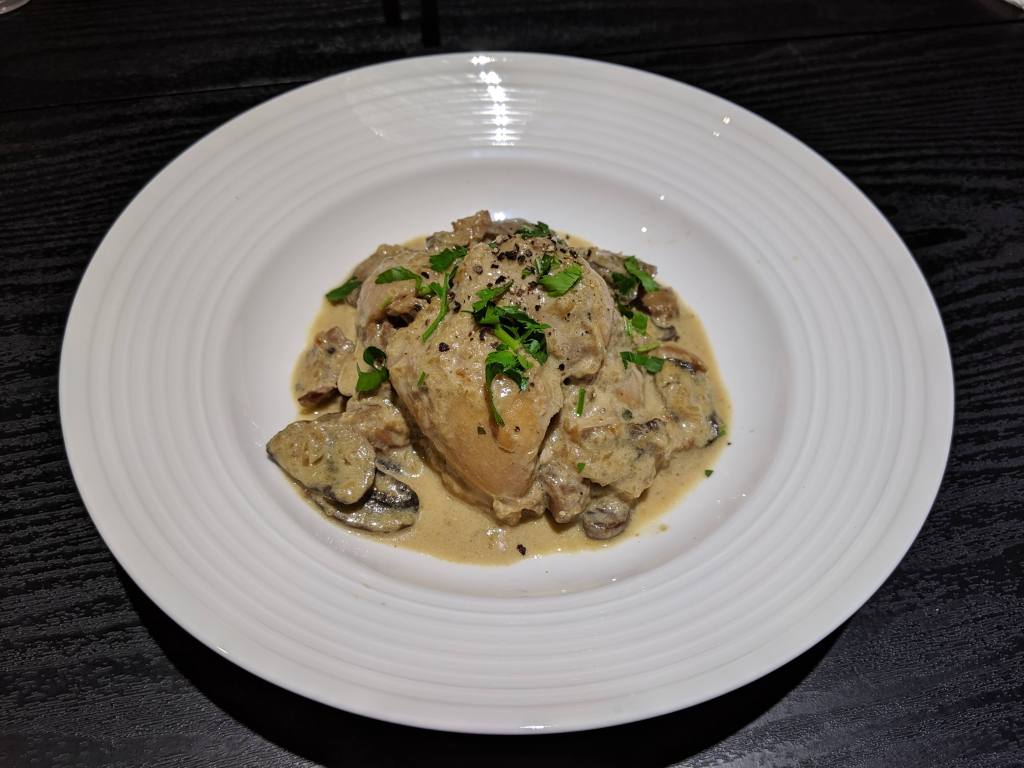
Description: Chicken with creamy mushroom sauce. It goes well with plain pasta or bread. Easy to cook but it is actually an amazingly tasty dish for dinner.
Serves: 4
Cooking time: 45 minutes
Ingredients
- Chicken thigh – 600g
- Onion – chopped in small pieces, 1 pieces or 150g
- Garlic – chopped in small pieces, 2 cloves
- Single cream – 100 mL
- Parsley – 2 tablespoons
- Unsalted butter – 10g
- Brown mushrooms – sliced, 230g
- Chicken stock cube – 1
- Ground black pepper – 2×4 dashes
Method
1. In a non-stick sauce pan, add unsalted butter and fry the onion and mushrooms until they get brown over low heat.
2. Add stock cube and water 450 mL into the pan, then bring it to a boil. Once it’s boiled, add the chicken.
3. Simmer with medium heat for 30 minutes, stirring them occasionally.
4. When the soup has thickened, add cream and mix. Switch off the heat before it boils again.
To serve: sprinkle fresh parsley and ground black pepper.
| Kcal | Protein | Fat | Carbs | Fibre | Sugars | Salt | Saturated Fat | Vitamin B6 | Vitamin B12 | Phosphorus |
|---|---|---|---|---|---|---|---|---|---|---|
| 431.8 | 27.7g | 32.1g | 8.3g | 1.4g | 3.2g | 1.3g | 11.4g | 0.6mg | 1.0μg | 319.1mg |
| 21.6% | 55.5% | 45.8% | 3.2% | 4.5% | 3.6% | 22.5% | 56.9% | 54.1% | 65.8% | 58.0% |
Nutritional Values Per Serving
Nutritional Tips
This dish is easy to cook and savoury. It contains a good amount of protein, low sugar and carbs. However, due to the use of cream, it is high in fat. You may consider eating less fat in other meals and eating more vegetables and carbs on the side or other meals. Alternatively, you may use chicken breast instead of chicken thigh, removing the skin of the chicken thigh or using light cream. Chicken is a good source of protein, vitamin Bs (especially, B3, B6, B12), phosphorus and zinc. Chicken is quite versatile and can be added to a variety of dishes as a protein source. Therefore, it is important to think about what you are eating as a whole package (e.g.: what ingredients or seasoning you are using or what cooking method you are implementing).
Phosphorus can be found mostly in our bones (approximately 80%) and the rest is distributed other parts of the body. It plays an important role in our bone health and energy metabolism. Phosphate is a part of adenosine triphosphate (ATP) and ATP provides energy to operate many functions in living cells (e.g: muscle contraction), it converts to adenosine diphosphate (ADP) or to adenosine monophosphate (AMP) during metabolic processes. It also is a part of nucleic acids (DNA and RNA).
When calcium intakes are low, high phosphorus intakes may be harmful as phosphate decreases ionised calcium in the plasma, so it promotes bone resorption to restore plasma calcium concentrations. Processed foods tend to be rich in phosphates, so we should be wary of the effects on our bone health. On the other hand, the body can control the increased absorption when phosphorus intakes are low and decrease renal excretion. Most foods contain phosphorus so deficiency would be rare except in some cases such as gastrointestinal malabsorption syndromes. However, in severe situations, this can cause rickets in children or osteomalacia. Good sources of phosphorus are red meat, poultry, dairy products and bread.
As always, you must seek professional advice when in doubt.
 Mignonne Nutri-Cuisine