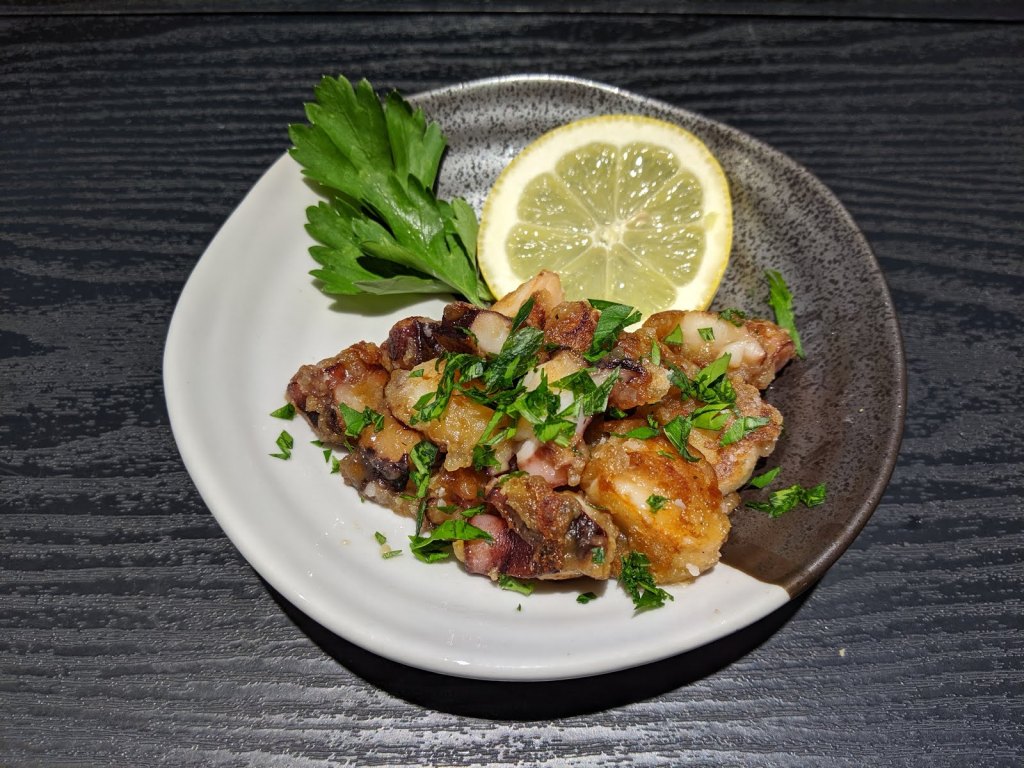
Description: Amazing side dish. It goes well with beer or white wine. Without deep frying, you can aim for a healthier option for crispy octopus non-fry karaage. It is one of the most popular izakaya (Japanese pub) dishes.
Serves: 2
Cooking time: 20 minutes
Ingredients
- Boiled octopus (alternatively, uncooked octopus and boil at home) – cut in bite size, 200g
- Garlic – pureed, 2 cloves
- Ginger – pureed, 1 teaspoon
- Soy sauce – 1 teaspoon
- Potato flour – 2 tablespoons
- Sunflower oil – 2 tablespoons
- Lemon juice – squeeze before serving, 1 teaspoon or squeeze from 1 wedge of lemon
- Parsley – chopped, 1 teaspoon
Method
1. Wipe the water from the octopus.
2. Mix garlic, ginger and soy sauce in a small bowl. Soak the octopus in the bowl at least 5 minutes (if you have time, leave it in the fridge for 1 hour to make the octopus absorb the taste much better)
3. Pat dry the octopus and put potato flour around it.
4. Heat the oil in a large non-stick frying pan or a wok, fry the octopus with medium heat. Turn it over once the bottom part is brown.
To serve: Squeeze the lemon and sprinkle parsley.
Nutritional Values Per Serving
| Kcal | Protein | Fat | Carbs | Fibre | Sugars | Salt | Saturated Fat | Zinc | Vitamin E | Vitamin B6 |
|---|---|---|---|---|---|---|---|---|---|---|
| 327.9 | 30.9g | 16.2g | 13.5g | 0.7g | 0.5g | 1.5g | 1.5g | 3.5mg | 1.2mg | 0.8mg |
| 16.4% | 61.8% | 23.1% | 5.2% | 2.5% | 0.5% | 25.5% | 7.3% | 49.7% | 41.2% | 63.6% |
Nutritional Tips
‘Izakaya (居酒屋)’ is a Japanese-style pub where people go there to have drinks and meals. It is one of the cultural aspects and one of the most common places people go after work (instead of just going for a drink). These meals are usually prepared for sharing with others, matching with drinks but portions tend to be small. Izakaya offers different types of seating including by the counter, a private room, tables or tatami seating. Izakaya provides an oshibori (wet hand towel) for patrons to clean their hands before the meal (no need to go to the toilet just to wash your hands in Japan, I love this) and the towels are cold in summer and hot in winter (such a perfect service, some people even wipe their face … ). Then you start with Tsukidashi (or Otoshi) which is a tiny appetiser dish served in every izakaya and is usually unique (different by day and restaurant). This recipe can be either a Tsukidashi or an izakaya-style dish. Feel like eating like a Japanese? Try this.
This dish is a calorie-dense dish among izakaya-style food. However, instead of deep frying it, it uses less oil. It is rich in protein, zinc, vitamin B12, iron and phosphorus. There are some important nutrients.
So the point is … people eat little by little and focus on talking which is a similar style to Spanish tapas. Instead of eating one large portion of the dish, people order various foods and share them with others. Therefore, people tend to eat a variety of food. However, it is important to eat balanced food instead of ordering just greasy oily fried food to stay healthy. Recently, people have been more concerned about their health, so there are a lot of healthier options such as tofu salad, seaweed salad, sashimi, steamed edamame beans, kimchee, grilled chicken skewer steamed chicken breast etc. Of course, there are a lot of traditional dishes as well, including karaage (fried chicken), tempura, croquettes or french fries…
 Mignonne Nutri-Cuisine