Description: Healthy and fresh salad. It is easy to prepare and you can prepare it in advance and keep it in the fridge. One of 5-A-Day dishes and this can be a small appetizer or side dish.
Serves: 2
Cooking time: 10 minutes
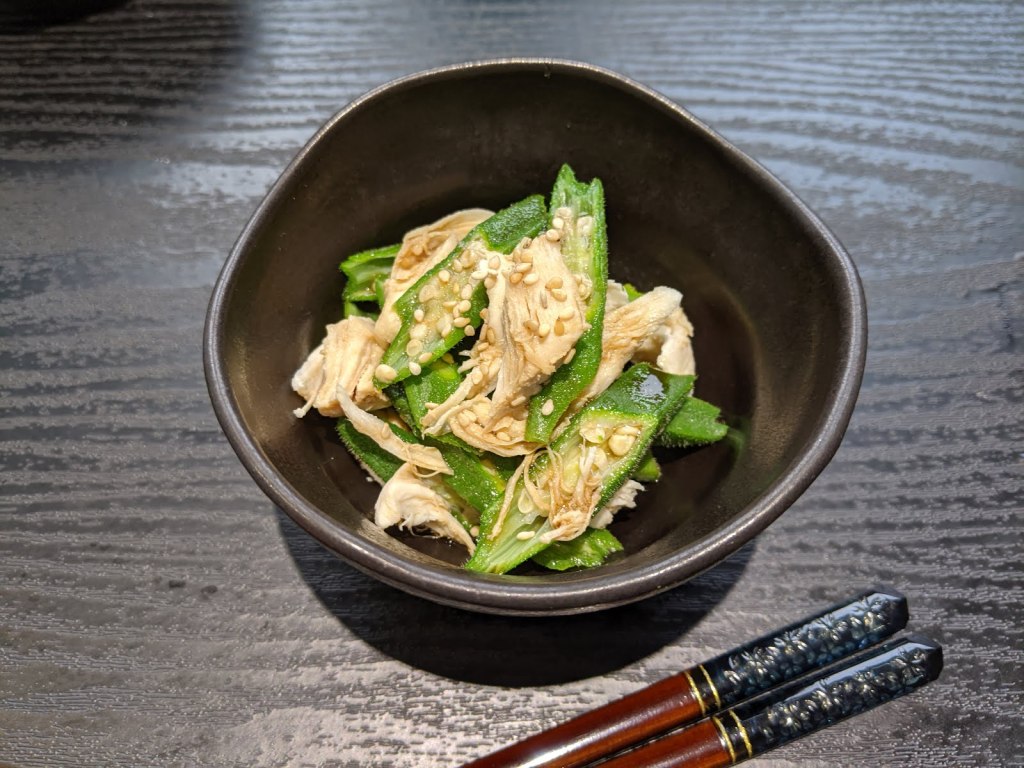
Ingredients
- Chicken breast – 150g
- Okra – chopped, 160g
- Sake cooking wine – 2 teaspoons
- Soy sauce – 2 teaspoons
- Sesame oil – 2 teaspoons
- Sesame seeds – ½ teaspoon
Method
1. Steam the okra and chicken.
2. Meanwhile, mix all the seasonings except sesame seeds in a small bowl.
3. Cut chicken and okra into bite size. Mix and place them in the bowl.
4. Pour the sauce on top.
To serve: sprinkle sesame seeds
Nutritional Values Per Serving
| Kcal | Protein | Fat | Carbs | Fibre | Sugars | Salt | Saturated Fat | Phosphorus | Vitamin B3 | Vitamin B6 |
|---|---|---|---|---|---|---|---|---|---|---|
| 205.1 | 17.7g | 12.0g | 6.5g | 2.7g | 1.3g | 0.9g | 2.7g | 192.9mg | 8.4mg | 0.6mg |
| 10.3% | 35.5% | 17.2% | 2.5% | 9.0% | 1.5% | 15.1% | 13.6% | 35.1% | 64.5% | 48.6% |
Nutritional Tips
Chicken is a good source of protein, vitamin Bs (especially, B3, B6, B12), phosphorus and zinc. Chicken is quite versatile and can be added to a variety of dishes as a protein source. Therefore, it is important to think about what you are eating as a whole package (e.g.: what ingredients or seasonings you are using or what cooking method you are implementing). In addition, it is also important to think about which part of the chicken you are consuming: thighs, breasts, skin, drumsticks, and wings. Chicken breast generally contains less fat and more protein (20.85g per 100g, 172 kcal, raw) while chicken thigh can be 16.52g per 100g, 221 kcal or chicken wing can be 17.52g per 100g, 191kcal according to USDA. So depending on the diet, people who are aiming to lose weight or build muscle may prefer chicken breast although people who follow a keto diet or low-carb diet may benefit more from thighs, wings, and drumsticks to achieve their nutritional requirements.
Okra contains both soluble fibres and insoluble fibres. The soluble fibres help reduce blood glucose levels in the body with diabetes (Khosrozadeh et al, Iranian Journal of Medical Sciences, 2016 May;41(3): S63. ). The soluble fibre in okra (which is the jelly-like part) contributes to slower digestion through our intestines and prevents the sudden spike of blood glucose levels and cholesterol in our body. On the other hand, the insoluble fibres can contribute to smooth peristalsis (movement of the bowel) of digested food through the gut as it takes time to chew it. Once it reaches the stomach or the colon, it expands and can prevent constipation.
 Mignonne Nutri-Cuisine