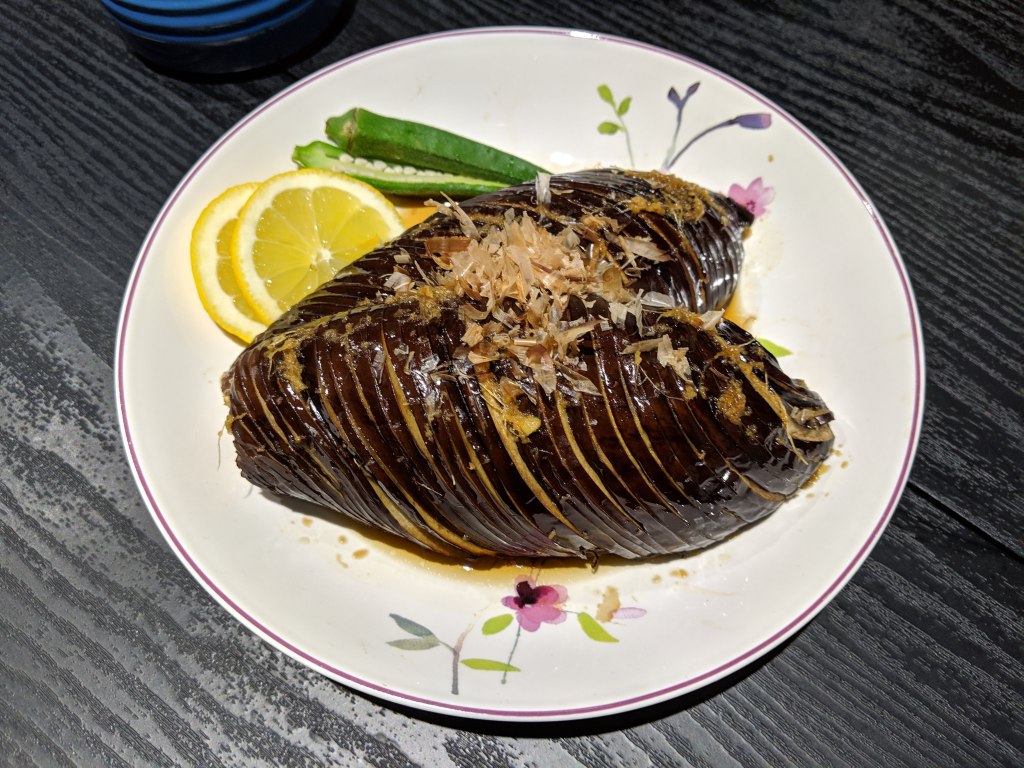
Description: Just a simple aubergine baked, but you can make it impressive. This can be served hot or cold.
Serves: 2
Cooking time: 15 minutes
Ingredients
- Aubergine – 1 piece or 200g
- Soy sauce – 1 teaspoon
- Mirin cooking wine – 1 teaspoon
- Sake cooking wine – 1 teaspoon
- Ginger – pureed, 1 teaspoon
- Sesame oil – 1 teaspoon
- Sunflower oil – 1 teaspoon
- Bonito flakes – 1 teaspoon
Method
1. Pre-heat the oven to 250C. Cut an incision on the Aubergine (2mm width). Stop just before you cut through so that the slices stay connected at the bottom of the aubergine. You can place a spoon or chopsticks next to the aubergine and when the knife hits them, stop slicing.
2. Brush the sunflower oil on the surface of the aubergine and grill it for 15 minutes.
3. Mix soy sauce, mirin, sake, sesame oil and ginger well.
4. When aubergine is cooked, serve with sauce and top it up with bonito flakes.
Nutritional Values Per Serving
| Kcal | Protein | Fat | Carbs | Fibre | Sugars | Salt | Saturated Fat |
|---|---|---|---|---|---|---|---|
| 74.9 | 1.4g | 4.8g | 7.4g | 3.0g | 4.3g | 0.5g | 0.5g |
| 3.7% | 2.8% | 6.8% | 2.9% | 10.1% | 4.8% | 7.6% | 2.6% |
Nutritional Tips
Free radical or reactive oxygen species (ROS) can be formed from both endogenous sources (during metabolism) and exogenous sources (alcohol, smoking, heavy metals, industrial solvents, certain drugs and radiation). They are known as harmful substances to our bodies.
Antioxidants are substances which are believed to protect your cells against free radicals damage. The damage to cell membranes, proteins including DNA may lead to cancer. It is still a fairly new topic, so it may not be possible to conclude that increased dietary intake of antioxidants alone reduces the risk of heart disease or cancer. However, some studies show their protective effects on our bodies.
Vitamin A, Vitamin C and Vitamin E are known as antioxidants. Unfortunately, there is not much scientific evidence to support that dietary intake of these nutrients reduces the risk of heart disease or cancer.
 Mignonne Nutri-Cuisine