Spicy Burdock and Konnyaku (牛蒡とこんにゃくのピリ辛煮)
Description: Quick, easy, healthy and filling side dish. It goes well with rice and beer. You can cook a large portion and eat it the next day too. It can be served hot or cold.
Serves: 3
Cooking time: 15 minutes
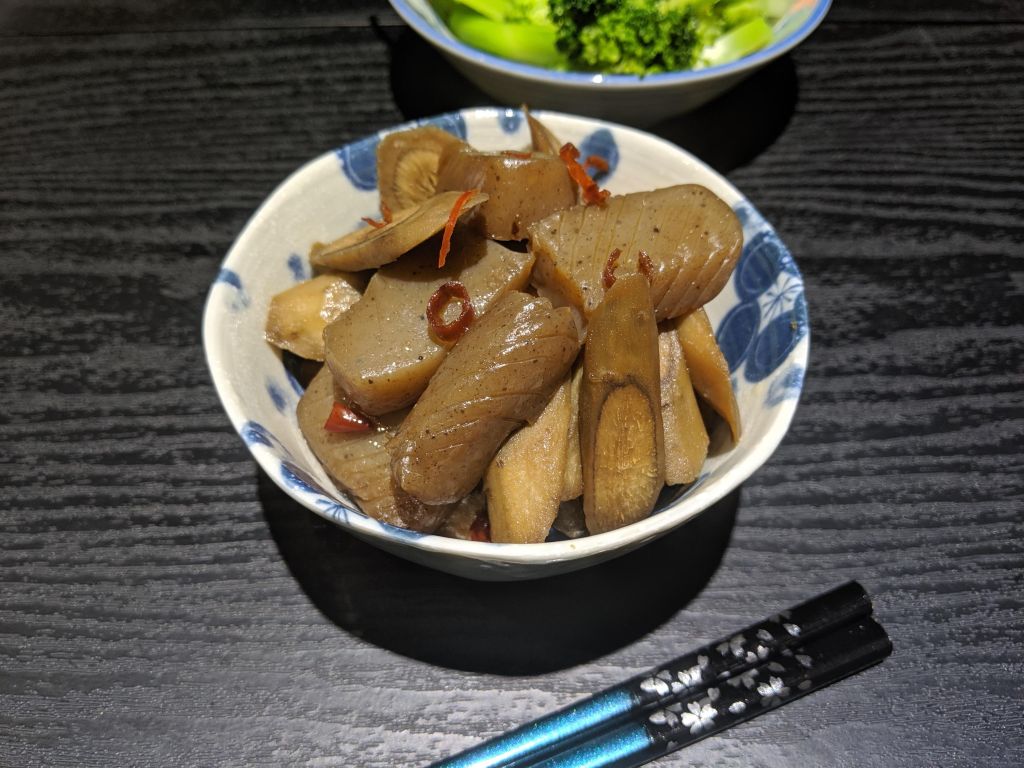
Ingredients
- Burdock – chopped diagonally, 200g
- Konnyaku – chopped and make incision, 1 piece (250g)
- Soy sauce – 1.5 tablespoon
- Sesame oil – 1 tablespoon
- Mirin cooking wine – 1 tablespoon
- Sake cooking wine – 1 tablespoon
- Dry chilli – chopped, 1 piece
Method
1. Heat a non-stick frying pan, add the sesame oil and dry chili, then fry the burdock and konnyaku over medium heat.
2. Add soy sauce, mirin, sake and 50 mL water. Cook until most seasonings are absorbed into the ingredients.
Nutritional Values Per Serving
| Kcal | Protein | Fat | Carbs | Fibre | Sugars | Salt | Saturated Fat |
|---|---|---|---|---|---|---|---|
| 109.6 | 1.8g | 4.7g | 16.5g | 4.1g | 3.5g | 1.3g | 0.7g |
| 5.5% | 3.5% | 6.7% | 6.3% | 13.8% | 3.9% | 21.7% | 3.3% |
Nutritional Tips
Konnyaku is made from the corm of the Asian plant called “Amorphophallus konjac”. It is very common in Japan and there are mainly two types, which are white and black. Konnyaku noodles are known as “Shirataki” or “Ito-konnyaku: thread-konnyaku” and they are frequently used in hot pots (e.g. sukiyaki) or soup dishes (e.g. oden). In Japan, you can also see “sashimi konnyaku” and they are usually eaten with a miso-based dipping sauce. It has very little taste and some kind of fishy smell, so it is important to cook with good seasonings or with other ingredients so that konnyaku won’t be too bland or boring. It is important to cut into small pieces and chew enough before swallowing due to its jelly-like texture.
Konnyaku contains only 5 kcal per 100g, so it has almost no calories but is relatively high in fiber for its calorie content. Therefore, people often eat them as a diet food. In fact, I ate a lot before my own wedding until I did not want to see them for a while. Also, one plate of konnyaku contains nearly a similar amount of calcium as half a glass of milk: 107.5mg and 119 mg (3.7% fat milk: USDA).
Burdock root is generally known as “greater burdock” or “gobo: 牛蒡/ゴボウ)”, scientifically as “Arctium lappa” and it is an underground tuber of the greater burdock plant. Burdock roots are also low in sugar, fat, and sodium, moderately low calories for vegetables (72 kcal per 100g: USDA) and a good source of potassium. Their skin is dark brown in colour and it looks like a tree branch and tastes crunchy and fibrous. Once it is exposed to the air after cutting, it starts oxidising and becomes pink, dark or grey. To avoid this, it is recommended to soak the slices in water or vinegar, although it is better not to soak for too long to prevent losing nutrients.
Burdock is quite versatile and can be added to a variety of dishes such as kinpira gobo, tempura, soup, salad or chips. For people on potassium-sparing diuretic therapy, it may aggravate potassium-toxic symptoms such as stomach pain, feeling sick and diarrhoea. Also, elderly or people whose kidney function is compromised should be careful. 100g of raw broccoli and burdock contain similar amounts of potassium (316mg and 308mg, respectively: USDA). As always, you must seek professional advice when in doubt.
 Mignonne Nutri-Cuisine