Description: Refreshing pasta. The combination of chicken, lemon and herbs are just amazing. This dish goes well with some green salad or steamed vegetables on the side. Also enjoyable with white wine 😀
Serves: 2
Cooking time: 30 minutes
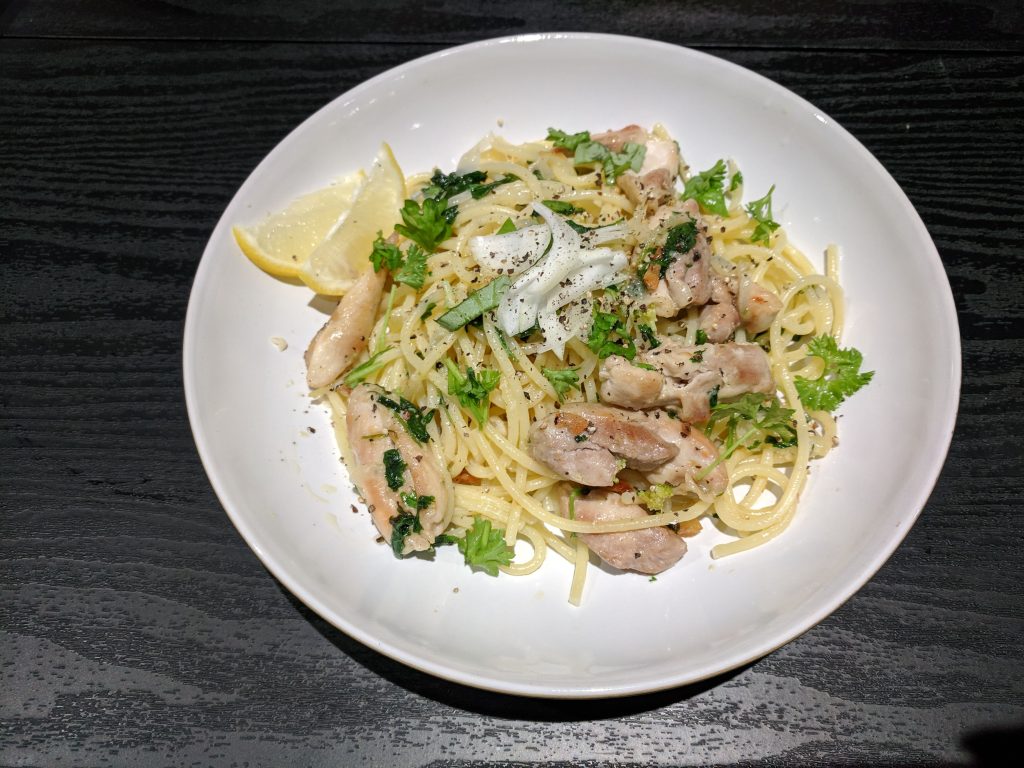
Ingredients
- Spaghetti – 160g
- Extra virgin olive oil- 1 tablespoon
- Lemon juice – 2 tablespoons (squeezed from half a lemon)
- Garlic – crushed to puree, 4 cloves
- Onion – thinly sliced, half of the small size or 20g
- Chicken thigh – 140g
- Basil leaves – 20 leaves or 5g
- Fresh parsley – a half cup or 4g
- Parmesan cheese (hard) – grated, 10g
- Black Pepper – ground, ½ teaspoon
- Salt – 2 dashes
Method
1. Cook the spaghetti until al dente in plenty of boiling water with salt.
2. When the pasta is almost cooked, heat the extra virgin olive oil in a large non-stick frying pan over low heat. Add the garlic and cook it for 30 seconds, stirring regularly.
3. Add parsley, basil and hot drained pasta to the frying pan, then toss to mix. Add parmesan cheese, black pepper and lemon juice until the cheese is melted and the pasta evenly coated.
4. If it needs a little more moisture, add a splash of the pasta-cooking water.
To serve: sprinkle freshly cut parsley, basil, parmesan cheese and salt according to personal preference.
Nutritional Values Per Serving
| Kcal | Protein | Fat | Carbs | Fibre | Sugars | Salt | Saturated Fat | Vitamin B2 | Vitamin B3 | Vitamin B12 |
|---|---|---|---|---|---|---|---|---|---|---|
| 539.1 | 24.1g | 21.4g | 63.5g | 3.5g | 2.4g | 0.7g | 4.1g | 0.5g | 9.1mg | 0.5μg |
| 27.0% | 48.2% | 30.6% | 24.4% | 11.6% | 2.6% | 11.4% | 20.4% | 45.3% | 69.9% | 32.9% |
Nutritional Tips
This dish is high in protein and a good source of carbs. A healthier option could be using chicken breast instead of chicken thigh. It would increase protein intake due to the chicken breast while reducing the fat content and calories. Alternatively, you may consider using less chicken.
Chicken is a good source of vitamin B3(Niacin), vitamin B6, vitamin B12, some vitamin B1(Thiamin) and vitamin B2(Riboflavin). Vitamin B is a water-soluble vitamin and there are many different types, all of which play important roles in our body.
For example, vitamin B12 helps to maintain our blood health and the nervous system. It is involved in methionine synthesis and is important for the degradation of some amino acids and odd-chain fatty acids (Watanabe et Nakano, Nihon Rinsho. 1999 Oct;57(10):2205-10). Lack of vitamin B12 causes megaloblastic anaemia which results in the same symptoms as folate deficiency as well as demyelination of the spinal cord, brain and nerves (optic and peripheral).
Typical sources of vitamin B12 are animal products such as milk, cheese, eggs, meat, salmon or cod. So it would be very challenging for people who follow a vegan/vegetarian diet as the source is limited. There are some breakfast cereals, soya drinks or yeast extract (such as Marmite) that are fortified with B12. So those who do not consume animal products need to have a sufficient intake through these or take supplements.
 Mignonne Nutri-Cuisine