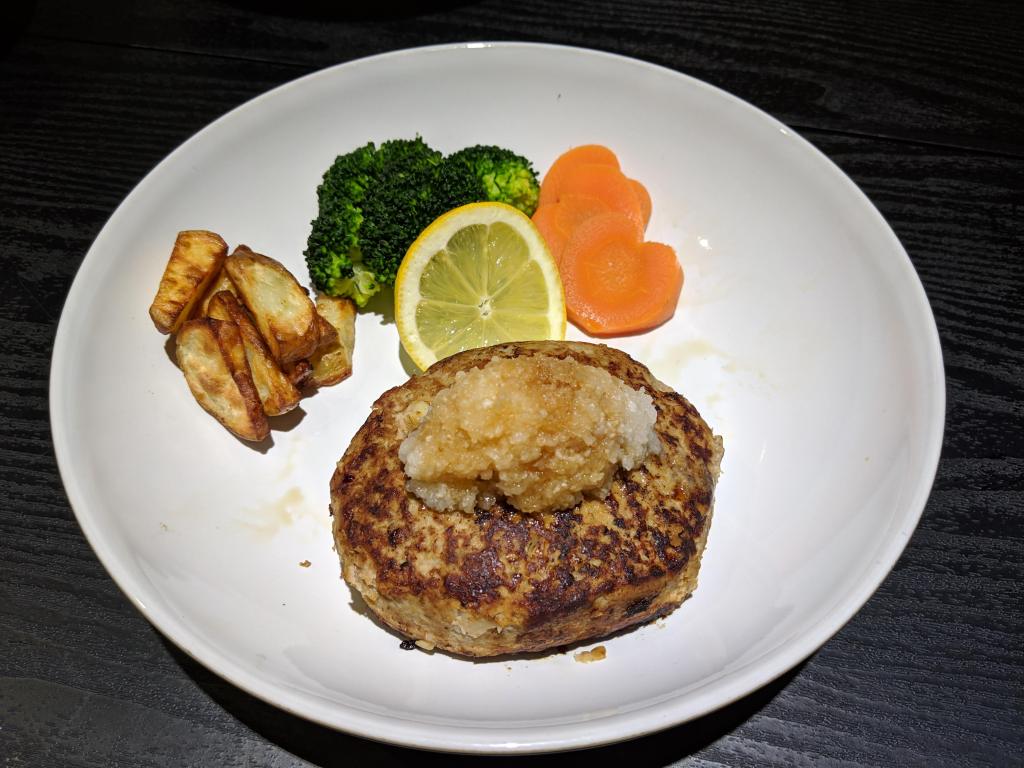
Description: Amazing homemade pork mince steak in Japanese style. It is a very healthy and filling mince steak. You may use chicken or turkey mince instead.
Serves: 4 pieces (200g per piece or smaller size and more numbers)
Cooking time: 40 minutes
Ingredients
- Pork mince (4%) – 500g
- Medium egg – 1
- Onion – cut in pieces, 150g or 1 big piece
- Unsalted butter – 5g
- Garlic – cut in pieces, 4 cloves
- Lotus Roots – half grated, half cut in pieces, 200g
- Salt – 2 dashes
- Ground black pepper – 2 dashes
- Nutmeg – ¼ tablespoon
- Ponzu – 3 tablespoons
- Daikon radish – grated, 60g
Garnish (optional): - Carrot – chopped and steamed, 90g
- Broccoli – chopped and steamed, 150g
- Baby potatoes – chopped and air-fried, 210g
Method
1. In a non-stick frying pan, add unsalted butter and fry the onion until it gets brown over low heat.
2. Mix all the ingredients including onions fried on procedure #1 for the steak.
3. Shape the meat into round balls or flat elliptic shape.
4. Fry them in a large non-stick pan over medium heat, turning them occasionally and place the lid while cooking.
To serve: Top it up with grated daikon radish and pour ponzu.
Nutritional Values Per Serving
| Kcal | Protein | Fat | Carbs | Fibre | Sugars | Salt | Saturated Fat | Zinc | Vitamin B12 | Phosphorus |
|---|---|---|---|---|---|---|---|---|---|---|
| 301.8 | 34.2g | 14.8g | 15.2g | 3.5g | 2.8g | 1.2g | 5.2g | 2.9mg | 1.0μg | 311.1mg |
| 15.1% | 68.4% | 5.8% | 11.6% | 11.6% | 3.1% | 20.0% | 25.8% | 41.0% | 63.6% | 56.6% |
Nutritional Tips
Adding garnish will increase the intake of fibre, vitamin C, and vitamin A without boosting fat or calorie intake, only an additional 65 kcals. It is important to have some vegetables altogether. Pork is rich in protein, vitamin Bs (especially B3, B6 and B12), zinc, and phosphorus. Processed pork such as ham, and bacon contains large amounts of salt. Therefore, it is important to think about what you are eating as a whole package.
Zinc is a cofactor for various types of enzymes in our body and is involved with the proteins, carbohydrates and lipids metabolism. It also plays an important role in the immune system. Zinc is mainly found in meat, milk and cheese. Whole grain cereals are also good sources, although the milling process removes not only zinc but also fibre, phytate, and calcium (Sanders and Emery, 2003, Molecular Basis of Human Nutrition). Copper and iron inhibit zinc absorption by competing for uptake, while protein and some amino acids (histidine and cysteine) may increase the solubility of zinc and increase its uptake. Our body does not store zinc, therefore, it is important to have a regular dietary supply. Deficiency may lead to poor wound healing, loss of taste sensitivity or growth retardation.
 Mignonne Nutri-Cuisine