Description: Easy and fast to prepare. This can be a small appetiser or a side dish. It is crunchy and very refreshing.
Serves: 2
Cooking time: 10 minutes
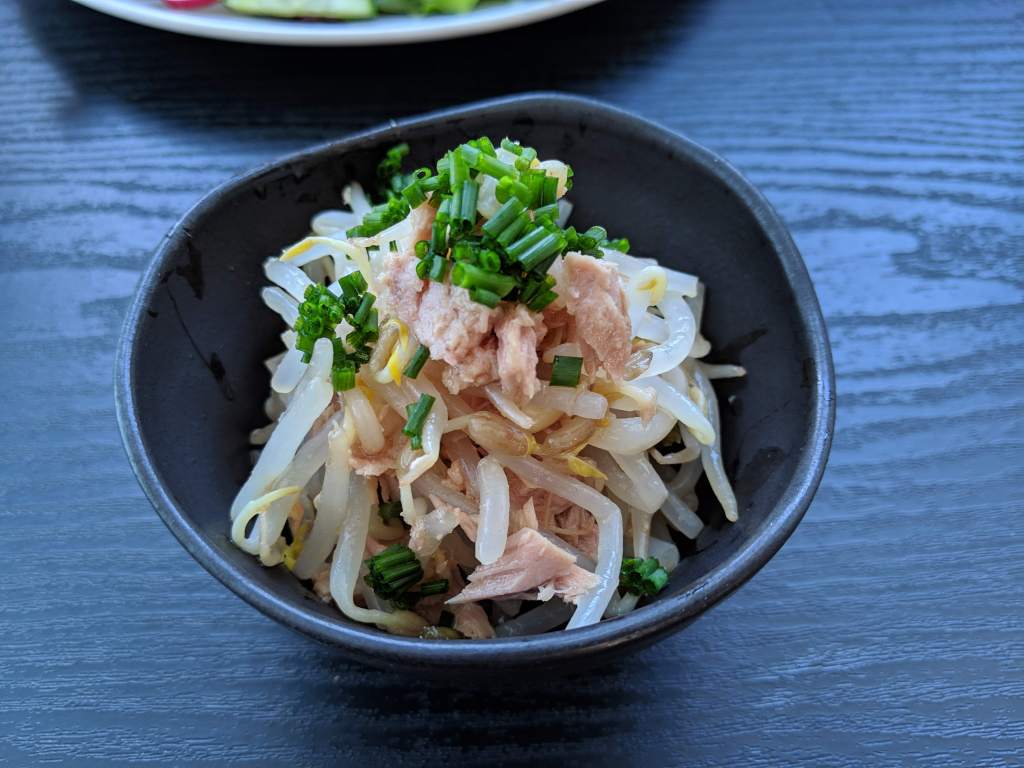
Ingredients
- Beansprout – 200g
- Tuna tin – half tin, 55g
- Ponzu – 1 tablespoon
- Sesame oil – 1 teaspoon
- Chive – chopped, 1 teaspoon
Method
1. Steam the bean sprouts. Once they are cooked, pat them dry.
2. In a small bowl, mix the steamed bean sprouts with tuna, sesame oil and ponzu.
3. Top it up with chive.
Nutritional Values Per Serving
| Kcal | Protein | Fat | Carbs | Fibre | Sugars | Salt | Saturated Fat | Vitamin C | Vitamin B12 |
|---|---|---|---|---|---|---|---|---|---|
| 107.3 | 11.0g | 5.1g | 4.9g | 0.6g | 0.2g | 0.4g | 0.7g | 15.2mg | 0.6μg |
| 5.4% | 22.1% | 7.2% | 1.9% | 2.1% | 0.2% | 7.4% | 3.4% | 37.9% | 40.3% |
Nutritional Tips
Bean sprouts are known to stay fresh for a fairly short time in the fridge, similar to some other vegetables such as asparagus, okra, or avocado. Therefore, it is better to consume them as soon as possible, ideally within a day or two after purchase. The warm temperature or humidity is ideal for the rapid growth of bacteria. So it is important to cook thoroughly (until they are boiling hot) before consuming them. Pregnant women, people aged 65 and over, those with underlying health conditions, and children are not recommended to eat raw bean sprouts.
Beans sprouts contain about 30 kcal per 100g, some fibre with almost no fat, and are a good source of vitamin C. They are a nice addition to your diet as they can increase the dish volume without boosting calorie content and help us feel fuller. Therefore, they are a good choice if you are following a low-fat diet or trying to lose weight. In addition, they may be beneficial to type-2 diabetes (Yao et al, Journal of Agricultural and Food Chemistry, 2008 Oct 8;56(19):8869-73, Yeap et al, Journal of Biomedicine and Biotechnology, 2012; 2012: 285430.). They are commonly coming from mung beans and soybeans. Soybean sprouts are yellow in color and slightly larger compared to mung bean sprouts and they tend to be green. They are quite versatile as well as relatively inexpensive, so you enjoy them with salads, stir-fried vegetables, soups, Korean pickles, hot pot, yakisoba, or Japanese ramen noodles.
 Mignonne Nutri-Cuisine