Description: A low-calorie Japanese dish. Amazingly, konnyaku has only 5 kcal on its own per 100g. The best ingredient to control weight and aim for a healthy diet.
Serves: 2
Cooking time: 10 minutes
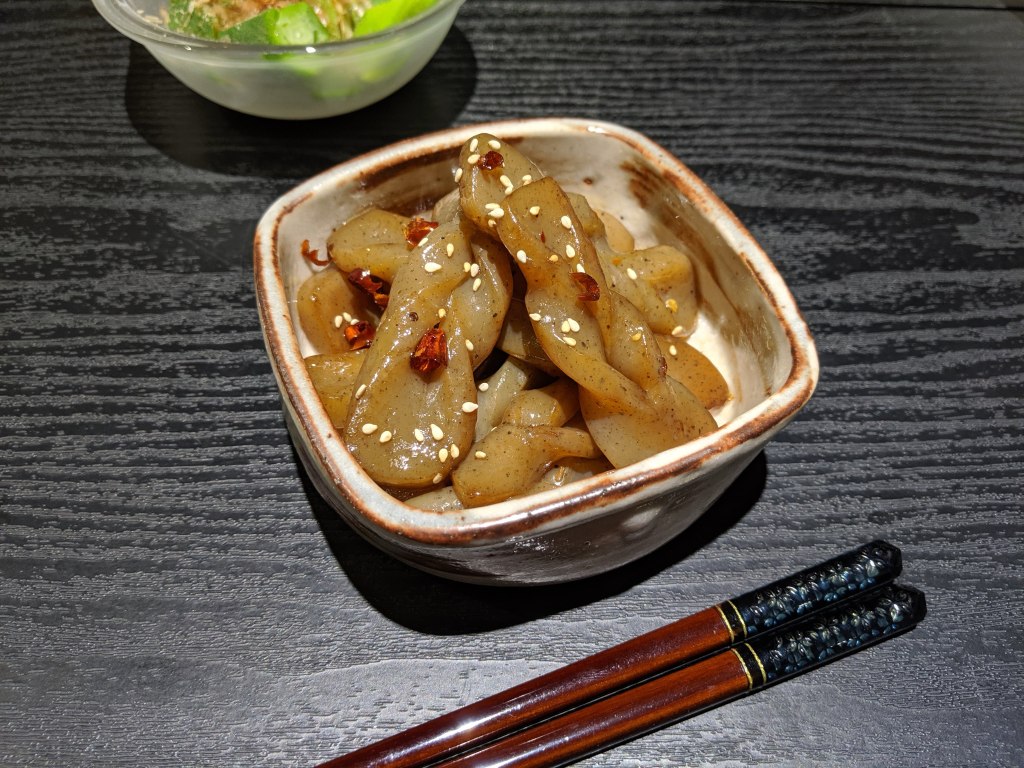
Ingredients
- Konnyaku – chopped and made incision, 1 piece (250g)
- Soy sauce – 1 tablespoon
- Sesame oil – 1/2 tablespoon
- Mirin cooking wine – 1/2 tablespoon
- Dry chili – chopped, 1 piece
- Sesame seeds – according to personal preference
Method
1. Heat a non-stick frying pan, add sesame oil and dry chili, then fry konnyaku over medium heat.
2. Add soy sauce and mirin. Cook until most seasonings are absorbed into the ingredients.
3. Sprinkle sesame seeds on top.
Nutritional Values Per Serving
| Kcal | Protein | Fat | Carbs | Fibre | Sugars | Salt | Saturated Fat |
|---|---|---|---|---|---|---|---|
| 52.0 | 0.9g | 3.8g | 5.4g | 3.0g | 1.2g | 1.2g | 0.5g |
| 2.6% | 1.8% | 5.5% | 2.1% | 9.9% | 1.3% | 20.2% | 2.7% |
Nutritional Tips
Konnyaku is made from the corm of the Asian plant called “Amorphophallus konjac”. It is very common in Japan and there are mainly two types, which are white and black. Konnyaku noodles are known as “Shirataki” or “Ito-konnyaku: thread-konnyaku” and they are frequently used in hot pots (e.g. sukiyaki) or soup dishes (e.g. oden). In Japan, you can also see “sashimi konnyaku” and they are usually eaten with a miso-based dipping sauce. It has very little taste and some kind of fishy smell, so it is important to cook with good seasonings or with other ingredients so that konnyaku won’t be too bland or boring.
Konnyaku contains only 5 kcal per 100g, so it has almost no calories but is relatively high in fiber for its calorie content. Therefore, people often eat them as a diet food. In fact, I ate a lot before my own wedding until I did not want to see them for a while. Also, one plate of konnyaku contains nearly a similar amount of calcium as half a glass of milk: 107.5mg and 119 mg (3.7% fat milk: USDA).
We can also consume konnyaku as a fruit jelly snack in smaller or one-bite size which is very popular in Asian countries. However, it is warned for suffocation or choking among children and elderly due to its texture. Thus, some countries have banned it, so you may not see it around easily. It is important to cut it into small pieces and chew enough before swallowing, especially for these people.
 Mignonne Nutri-Cuisine