Description: Fresh vegetable pasta. No need to use tomato tins but easy to cook tomato sauce for spaghetti. This can be either a main dish or a side dish if you use different types of pasta such as farfalle, penne, or tortiglioni pasta. It can be served hot or cold.
Serves: 2
Cooking time: 25 minutes
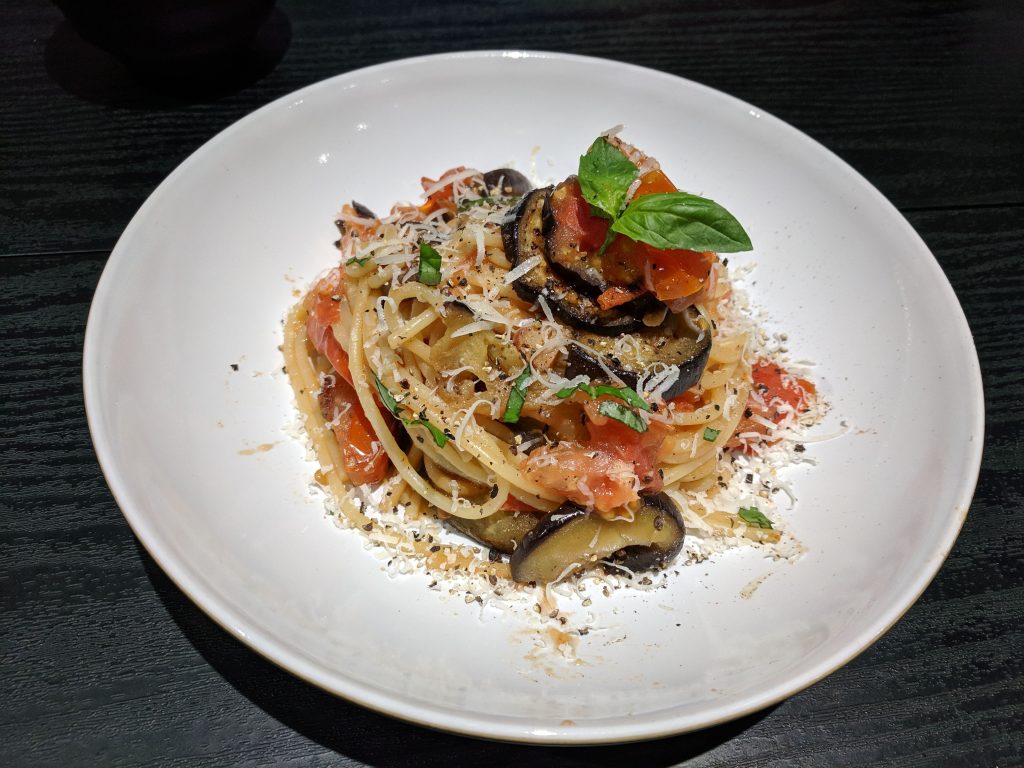
Ingredients
- Spaghetti – 140g
- Aubergine – cut into half moon 400g or 2 pieces
- Garlic – chopped, 4 cloves
- Olive oil – 1 tablespoon
- Black pepper – ground, ½ teaspoon
- Salt – 4 dashes
- Basil leaves – chopped, 4 leaves or 1g
- Fresh Tomatoes – chopped in small dices, 3 pieces or 180g
- Parmesan cheese – 10g
- Onion – thinly sliced, 1 small piece or 150g
- White wine – 100mL
Method
1. Cook the spaghetti until al dente in plenty of boiling water with salt.
2. Meanwhile, heat the extra virgin olive oil in a large non-stick frying pan, then add garlic over low heat for 30 seconds, stirring regularly.
3. Stir in the aubergine, 50 mL water, salt, and black pepper change the heat to medium then close the lid.
4. When the aubergine is cooked, add the tomatoes, basil leaves, white wine, and hot drained pasta to the frying pan. Mix well.
5. Sprinkle black pepper and parmesan cheese.
To serve: Sprinkle additional ground black pepper, and chopped basil if needed.
Nutritional Values Per Serving
| Kcal | Protein | Fat | Carbs | Fibre | Sugars | Salt | Saturated Fat | Vitamin B6 | Vitamin E | Folate |
|---|---|---|---|---|---|---|---|---|---|---|
| 477.2 | 14.6g | 10.2g | 77.3g | 11.2g | 14.4g | 1.0g | 1.0g | 0.4mg | 1.1mg | 73.2μg |
| 23.9% | 29.2% | 14.5% | 29.7% | 37.2% | 14.6% | 16.0% | 5.2% | 36.3% | 37.6% | 36.6% |
Nutritional Tips
This is one of the healthy pasta recipes without any stock cubes or added sugar. The sugar content may look slightly higher than other pasta dishes, however, the sugar content in this meal is all natural sugar as it mainly comes from the aubergine, tomatoes and onions. So you do not need to worry so much although I highlighted with yellow colour on the nutritional values on the table. You can cook without onions or you can add more onions to make it even sweeter. Depending on the amount of onions, the pasta’s taste will vary. I personally think onions are a “natural secret sugar”. When onions are raw, they are crispy, crunchy, and far from sweet. When they are cooked a high heat, they are still kind of crunchy (and get burnt easily). When they are cooked medium to low, they become really soft and sweet. They change their own taste depending on how we cook them, but the funny thing is, they are still onions… Personally, I like cooked onions with low or medium heat but not in a salad as it tastes kind of bitter 😦
“Caramelization” of onions is really common in French cuisine, especially in the French onion soup. That soup tastes really sweet and it is not because French people are crazy for sweetness and add a pot of sugar in there (my husband is French and he knows it). It is actually because the chemical reaction in onions makes the dishes sweet. “Pyrolysis” (non-enzymatic reaction) happens when we cook vegetables with heat. There are different types of sugars:
●monosaccharides (simple sugars, most basic units of carbohydrates, one single sugar molecule such as glucose or fructose)
●disaccharides (two sugars bonded together such as sucrose: table sugar)
●polysaccharides (many sugars bonded together such as starch: polymers of glucose, cellulose: structural polysaccharides which are used in the cell walls of plants/other organisms).
Plants/vegetables contain different types of natural sugar and when these polysaccharides are broken down into smaller molecules by cooking, not only do they become sweeter but also softer.
 Mignonne Nutri-Cuisine