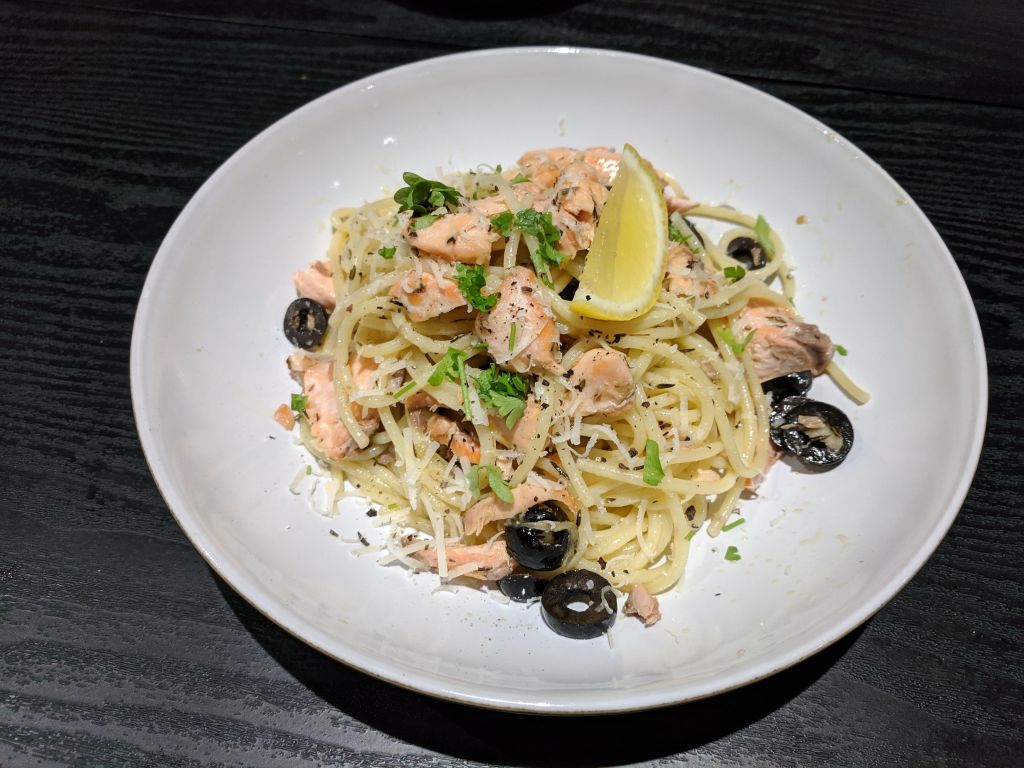
Description: Refreshing olive oil-based pasta. It goes well with white or rosé wine. This can be a nice weekend lunch or even dinner 🙂 I would say this is a balanced pasta meal which contains, protein, carbs and fat nicely. You may eat some salad or steamed vegetables as well then that would be ideal for a light-course meal.
Serves: 2
Cooking time: 30 minutes
Ingredients
- Spaghetti – 180g
- Extra virgin olive oil – 2 tablespoons
- Garlic – crushed, 2 cloves
- Onion – thinly sliced, half of a small size or 20g
- Salmon – chopped in a small chunk, 150g
- Pitted olives – 10 or 15g
- Thyme – 1 tablespoon
- Lemon juice – 2 tablespoons (squeezed from a half lemon)
- Salt – 2 dashes
- Parmesan cheese – grated, 10g
- Parsley – chopped, ½ teaspoon
- Ground black pepper – according to the personal taste
Method
1. Cook the spaghetti until al dente in plenty of boiling water with salt.
2. When pasta is almost cooked, heat the extra virgin olive oil in a large non-stick frying pan, cook garlic and onion over low heat for 30 seconds, stirring regularly.
3. Add the salmon and thyme to the pan with salt and black pepper.
4. When the salmon is almost cooked, add the drained pasta, black olives and lemon juice to the frying pan, then toss. If it needs a little more moisture, add a splash of the pasta-cooking water.
5. Sprinkle parmesan cheese and parsley.
To serve: sprinkle freshly cut parsley, ground black pepper and grated parmesan cheese
Nutritional Values Per Serving
| Kcal | Protein | Fat | Carbs | Fibre | Sugars | Salt | Saturated Fat | Phosphorus | Vitamin B3 | Vitamin B12 |
|---|---|---|---|---|---|---|---|---|---|---|
| 580.6 | 28.9g | 20.9g | 70.5g | 4.1g | 2.5g | 0.8g | 3.2g | 227.3g | 13.1mg | 2.5μg |
| 29.0% | 57.8% | 29.8% | 27.1% | 13.6% | 2.8% | 13.4% | 16.2% | 41.3% | 100.7% | 165.5% |
Nutritional Tips
I would say this pasta dish is quite a balanced dish compared to those with just cheese sauces. This dish contains, protein, carbs, and fat nicely. You may eat some salad or steamed vegetables on the side as well to increase the intake of some minerals and vitamins and to achieve one of 5 A Day.
I believe that it is not necessary to stick to raw vegetables, a combination of raw and cooked vegetables is better. The structure/composition of vegetables can be changed when they are cooked. For example, vitamin C leaches into the water during boiling compared to steaming or microwaving. I personally think steaming tends to preserve more flavours and tastes than boiling. Cooking makes vegetables taste nicer in many dishes and it would help kids or even adults eat more of them. If you cook vegetables, I would suggest to minimise contact with water. If you boil, you may use the remaining water for the soup to maximise the nutrient intake. On the other hand, some nutrients are more easily absorbed when vegetables are cooked compared to their raw form. For example, lycopene which is one of the carotenoids (can be found in tomatoes, watermelons, or papaya). Some studies show that lycopene may decrease the risk of chronic diseases, such as some types of cancer and most notably prostate and cardiovascular diseases (Agarwal and Venketeshwer Rao. Canadian Medical Association Journal, 2000, 163(6), 739–744, Story et al, Annual Review of Food Science and Technology, 2010;1:189-210). Furthermore, whatever your cooking method is used, their fibre content remains the same.
Overall, it is important to include varieties of cooked and raw vegetables in your meals. Balance is the key! 🙂
 Mignonne Nutri-Cuisine