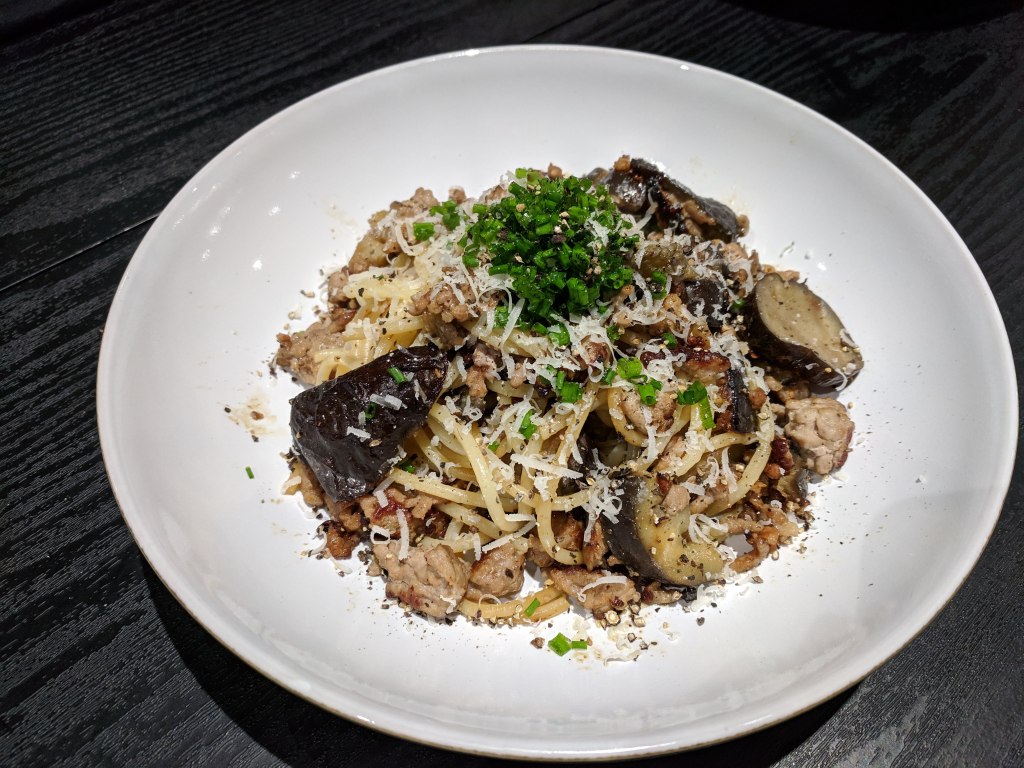
Description: It can be either a main dish or a side dish if you use different types of pasta such as farfalle, penne, or tortellini pasta. It can be served hot or cold. This dish gives a nice meaty taste of pasta with a nice punch of chive and black pepper. Without eating a large amount of pasta, it makes you feel full and satisfied !
Serves: 2
Cooking time: 25 minutes
Ingredients
- Spaghetti – 140g
- Aubergine – 400g or 2 pieces
- Garlic – chopped, 2 cloves
- Pork mince (10%) – 120g
- Olive oil – 1 tablespoon
- Black pepper – ground, ½ teaspoon
- Salt – 3 dashes
- Soy sauce – 1 teaspoon
- Unsalted butter – 5g
- Parmesan cheese – 10g
- Chive – chopped, ½ tablespoon
Method
1. Cook the spaghetti until al dente in plenty of boiling water with salt.
2. When pasta is almost cooked, heat the extra virgin olive oil in a large non-stick frying pan, then add the garlic over low heat for 30 seconds, stirring regularly.
3. Add the mincemeat and aubergine to the pan with salt and black pepper.
4. When the sauce is cooked, add the drained pasta to the frying pan. Mix well. If it needs a little more moisture, add a splash of the pasta-cooking water.
5. Sprinkle parmesan cheese and black pepper. Top it with the chopped chive.
To serve: Sprinkle additional ground black pepper and parmesan cheese.
Nutritional Values Per Serving
| Kcal | Protein | Fat | Carbs | Fibre | Sugars | Salt | Saturated Fat | Vitamin B2 | Vitamin B3 | Vitamin B6 |
|---|---|---|---|---|---|---|---|---|---|---|
| 506.5 | 27.4g | 17.9g | 64.9g | 8.8g | 8.4g | 1.2g | 4.3g | 0.6mg | 21.4mg | 0.6mg |
| 25.3% | 54.8% | 25.5% | 25.0% | 29.2% | 9.3% | 19.7% | 21.5% | 57.3% | 82.3% | 48.5% |
Nutritional Tips
For a healthier option (lower fat/calories), you may use lower-fat mincemeat. However, that would increase the protein intake. Alternatively, you may use a smaller amount of mincemeat and pasta.
Aubergine adds volume to this dish so it would make our stomach fuller. Aubergine is rich in fibre, Vitamin B6, potassium, and magnesium and contains some vitamin B1 and vitamin B3. It contains also low carb, fat, and calories (it is only 25 kcal for 100g). Therefore, it can contribute to weight loss and can replace higher-calorie ingredients. Aubergine contains more fiber than other vegetables, so it is a good option to increase the daily intake of fiber without boosting calories unlike whole grains, cereals, or pulses which are also rich in fibre.
There is one interesting component I would like to introduce: “Nasunin”. Nasunin (it is one type of anthocyanin, which can be found in its skin and purple colour) is known as a potential antioxidant of aubergine and a free radical scavenger, which protects brain cell membranes (Noda et al, Research Communications in Molecular Pathology and Pharmacology, 1998 Nov;102(2):175-87 ). These membranes have a function to evacuate waste out of the cells and let nutrients in. So why don’t you add aubergine to your diet sometimes ?
 Mignonne Nutri-Cuisine