Description: Japanese traditional meal to end the year and welcome the new year. No matter where I spend my new years’ eves, this would be something I cannot miss! This tradition lets go of the hardships of the year because soba (buckwheat) noodles are easily broken off while eating compared to other noodles, Soba’s thin and long shape also implies with a long and healthy life and wishes for good luck for the new year. Of course, this soba can be served anytime in the year, either hot or cold.
Serves: 2
Cooking time: 30 minutes

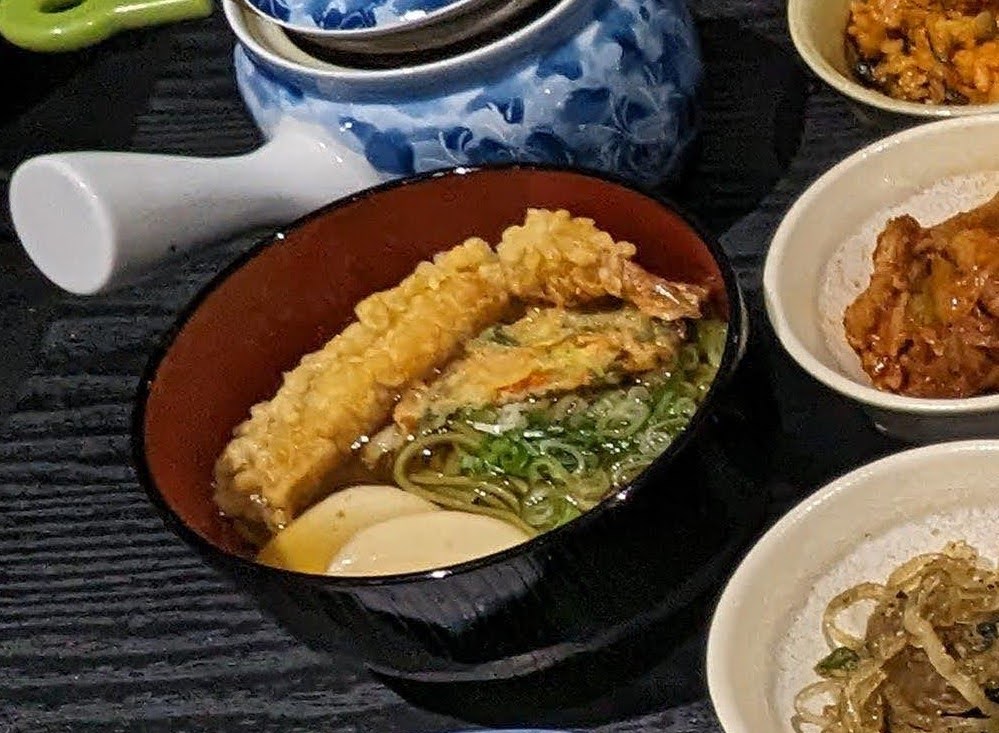
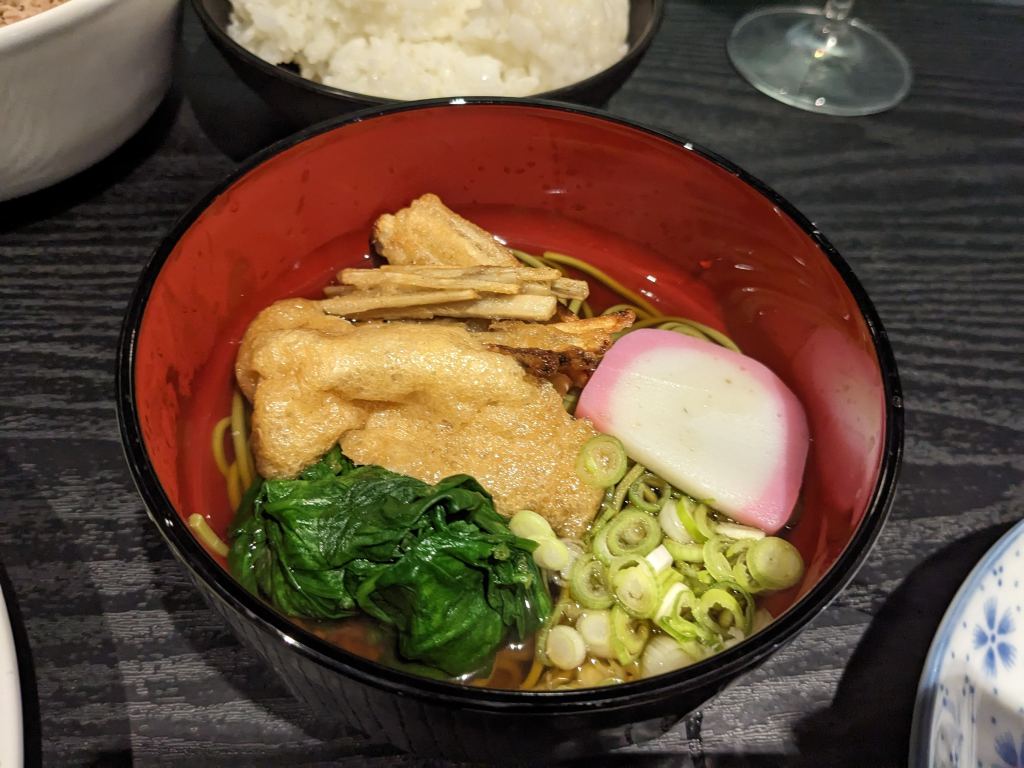
Ingredients
Soup:
- 800mL of bonito or kombu kelp dashi stock (You may cook it from scratch – boil the water, switch the heat off, then add 25g of bonito flake wait for 3 minutes, then sieve them with kitchen paper or fine cloth. Alternatively, use extract dashi powder 4g + 800 mL of hot water)
- Soy sauce – 1½ tablespoon
- Mirin cooking wine – ½ tablespoon
- Sake cooking wine – 1 tablespoon
Noodles:
- Soba buckwheat noodles – 140g
- Spring onions – chopped, 20g
- Tempura flakes – 10g (you can buy the readymade or use the remaining tempura batter to make)
- Spinach – steamed or blanched shortly, 100g
- Bonito Flake – for topping, 3g
Garnishes:
- Kamaboko fish cake (optional) – 4 pieces or 20g
- Dried nori seaweed (optional) – 2 sheets
- Lotus root (optional) – 2 slices or 40g
- Burdock (optional) – 1 tablespoon or 15g
- Tempura batter (optional) – 15g + 24mL (please follow the instructions on the package for the amount of water. You can also use plain flour if you wish)
- Sunflower oil (optional) – depends on your frying pan/wok size and shallow/deep fry, you might need to fill by half of the height of vegetables.
Method
Garnishes: You can cook while you are boiling soba at the same time. Just make sure not to forget the time.
1. Mix tempura batter and water (do not mix too hard to avoid forming gluten). Dip the vegetables.
2. Heat the wok or a frying pan with oil until frying temperature. Then fry the vegetables on both sides until it gets equally brown. For burdock, you may use a spoon to make a chunk and gently slide it into the wok or frying pan. Leave them aside.
Soup & noodles
1. In a large pan, make your dashi stock. Next, add the mirin, sake and soy sauce, then simmer gently for a few minutes.
2. In a separate pan, add the soba into boiling water, stir them slightly to prevent them from sticking together. Reduce the heat to medium and cook for around 8 minutes (please follow the instructions on the package).
3. Drain the soba and gently rinse the noodles in cold water to remove any excess of starch on the surface.
4. Gently reheat the stock and pour into bowls, then add the noodles and garnish. Sprinkle some bonito flake and chilli powder if you wish to.
Nutritional Values Per Serving
| Kcal | Protein | Fat | Carbs | Fibre | Sugars | Salt | Saturated Fats | Folate | Vitamin A | Vitamin E |
|---|---|---|---|---|---|---|---|---|---|---|
| 325.0 | 16.2g | 5.6g | 56.0g | 2.8g | 2.0g | 2.5g | 0.5g | 116.9μg | 234. μg | 1.1mg |
| 16.2% | 32.4% | 8.0% | 21.5% | 9.2% | 2.2% | 41.1% | 2.5% | 58.5% | 39.1% | 36.1% |
Nutritional Tips
Because this recipe was made for New Year’s Eve, it contains a lot of vegetables, but you can make it much simpler by just adding seaweed, spinach and spring onions without fried vegetables (tempura). Soba is known as Japanese buckwheat noodles. Soba is high in protein, and rich in Vitamin B1 and iron. Also, compared to white pasta, have a low Glycemic Index (GI: shows how quickly an ingredient affects your blood glucose level when it is digested and absorbed). Soba dishes tend to be soup-based, so it also helps to make you fuller. You can adjust the taste by controlling the amount of hot water in the soup. However, due to the salt content, not consuming the entire soup is recommended. You can have a tiny amount of thick soup (when it is for dipping) or a bit more by making it thinner.
To add more vitamins, minerals and fibre, I added some vegetables for topping :). It does not mean that you should just keep eating soba as white pasta contains more vitamin Bs for example. It is important to manage how you will add it to your current diet as a balanced diet is the key!
 Mignonne Nutri-Cuisine