Description: Simple and tasty homemade miso soup recipe with dashi stock. An essential side dish in Japanese cuisine, Japanese people consume miso soup almost every day, with different ingredients. You can eat as a side, an appetizer or even a part of a healthy snack. You can put various vegetables such as aubergine, cabbage, spinach, okra, pumpkin, onion, enoki mushrooms, shimeji mushrooms or bean sprouts.
Serves: 2
Cooking time: 10 minutes
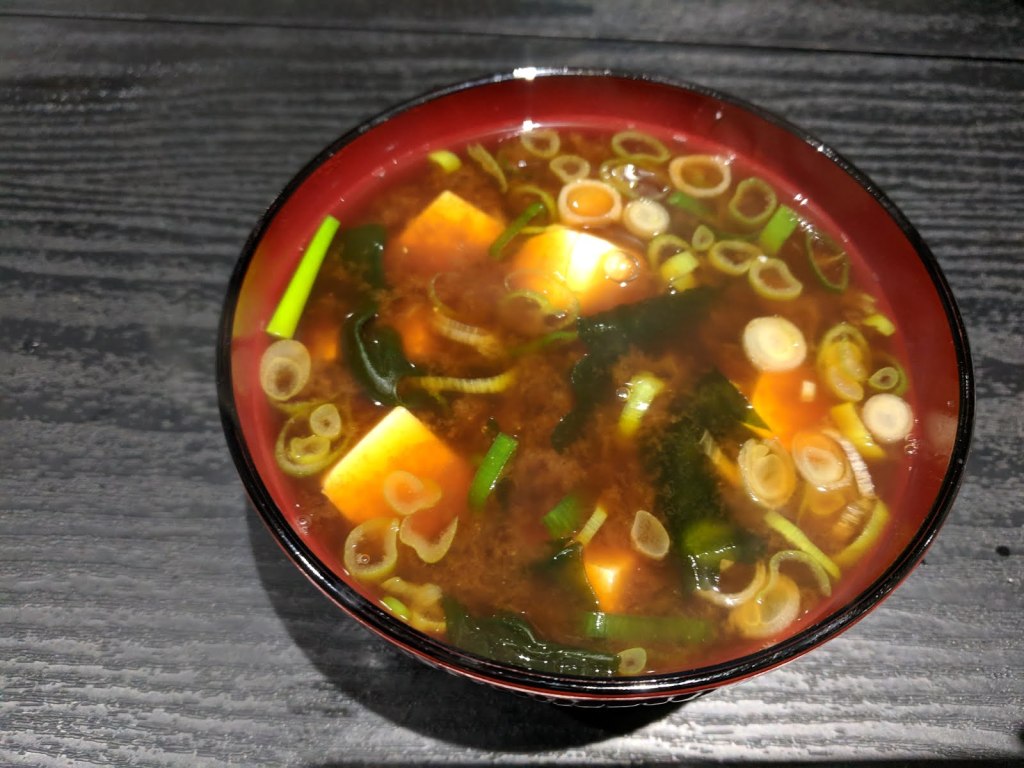
Ingredients
- Tofu – cut into small dice, 100g
- Spring onion – chopped, 15g
- Wakame (dried seaweed) – 2 teaspoons
- Dashi stock powder – 2g (please follow the package instructions)
- Miso paste- 1 tablespoon or 17g
- Water – 400ml
Method
1. Soak the dried wakame in water in the bowl for 1 minute.
2. Boil the water and dashi stock powder.
3. Once it is boiled, stop the heat, add the miso paste and dissolve it.Add tofu and wakame in the soup.
4. Pour the soup into small bowls and add the spring onion on top.
Nutritional Values Per Serving
| Kcal | Protein | Fat | Carbs | Fibre | Sugars | Salt | Saturated Fat |
|---|---|---|---|---|---|---|---|
| 54.9 | 4.7g | 2.0g | 5.0g | 0.7g | 1.4g | 1.1g | 0.3g |
| 2.7% | 9.5% | 2.8% | 1.9% | 2.5% | 1.6% | 17.9% | 1.4% |
Nutritional Tips
There are different types of colours and appearances of miso depending on the region or ingredients. Miso pastes are made from soybeans and some are a combination of wheat, rice or millet. The fermentation processing time can affect the flavour from sweet and mild to salty and rich. The colour is a good indicator of the strength in flavour. The most common flavour categories are red, mixed and white. I love the red one which tastes saltier: my grandmother used to make it when I was little and it reminds me of her adding my favourite ingredients. Miso is a traditional Japanese seasoning made from fermented soya beans with salt and koji (the fungus Aspergillus oryzae).
Miso is made from soybeans and is considered to be a complete source of protein as it contains all the essential amino acids. These have to be taken from food as they cannot be synthesized by our bodies and are necessary to human health. Miso also contains smaller amounts of calcium, iron, magnesium, zinc, phosphorus as well as B vitamins and has similar benefits to its mother, the soybean. On top of it, the fermentation process makes miso even better as it produces yeast and lactic acid bacteria, which may help prevent cancer and promotes good gut health (Brown and Valiere, Nutrition in Clinical Care 2004, 7(2): 56–68. ). Miso can be used for ramen, udon, hot pots, grilled fish, stir-fried vegetables etc.
Miso soup is one of the recommended dishes to consume every day, especially in winter for its warming effects. However, having too much might not be good as it increases the salt intake per day (6g). You may also make dashi from scratch by using bonito flakes and konbu (dried kelp, brown seaweed). You can add various vegetables and make it a rich soup (consider adding spinach or wakame seaweed, rich in potassium which prevents high blood pressure) or have it simple with very low calories to make yourself feel full 🙂
So why don’t you try adding miso soup to your meal or drinking instead of eating sugary snacks ?
 Mignonne Nutri-Cuisine